
10 Best 3D Printing Companies for Global Buyers

Choosing among the 10 Best 3d Printing Companies for Global Buyers requires more than comparing machine prices. Buyers must examine materials, production accuracy, certification, lead times, service coverage, and after-sales support. A factory may display impressive prototypes, yet struggle with repeatable tolerances or international delivery. That difference matters on a production floor.

The Wohlers Report 2024 valued the global additive manufacturing market at approximately $20.0 billion in 2023, with 13.5% year-on-year growth. Its findings show a maturing industry, not a simple equipment trend. Meanwhile, the ASTM International standards framework emphasizes process control, material consistency, and qualification. These details help separate serious suppliers from attractive but unproven offers. As Chuck Hull, inventor of stereolithography, explained, “The idea was to create a process that would allow you to make a three-dimensional object from a digital file.” That idea now supports aerospace parts, medical models, automotive tooling, and customized industrial components.

Still, no ranking can fit every buyer. A dental laboratory needs different validation than an automotive manufacturer. A low-cost desktop printer may be perfect for rapid design checks, but unsuitable for certified end-use parts. This guide compares leading 3d Printing companies through practical signals: technology range, material capability, global logistics, customer evidence, and technical support. Some information changes quickly. Pricing, delivery capacity, and certifications require direct verification. That is an unavoidable limitation.

The goal is not to promise a flawless choice. It is to make the next decision more informed, measurable, and realistic.
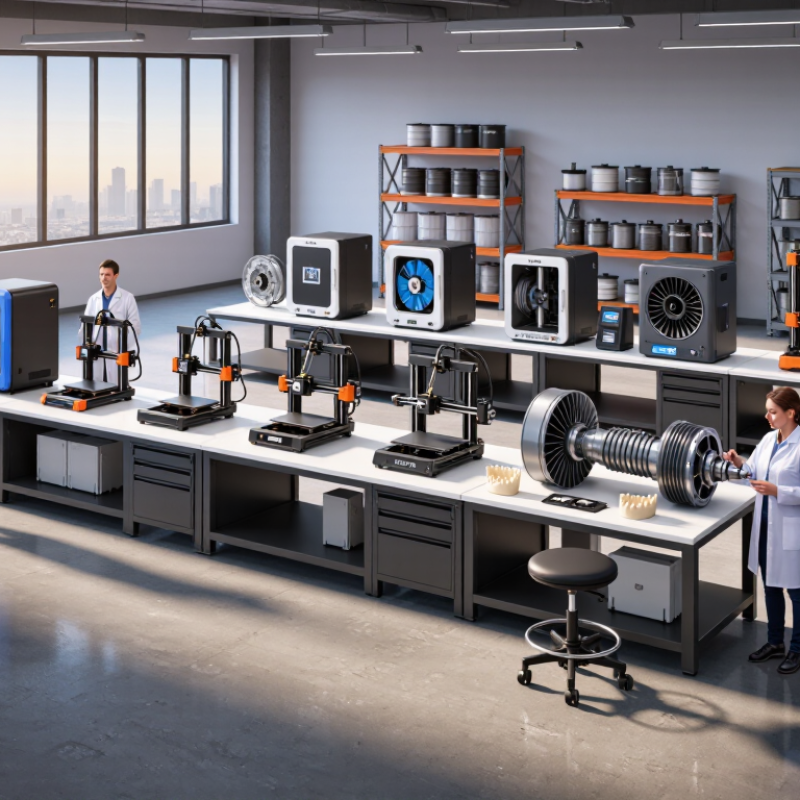
10 Best 3D Printing Companies for Global Buyers

Key Criteria for Evaluating 3D Printing Companies Worldwide

Choosing among the 10 best 3D printing companies requires more than comparing hourly prices. According to the 2024 Wohlers Report, the global additive manufacturing industry reached $20.035 billion in 2023, growing 13.5%. This expansion increases supplier choice, but also creates uneven quality. Global buyers should examine machine capability, material traceability, dimensional accuracy, and documented inspection procedures. Ask for sample parts, not polished claims.

Production reliability matters. Request evidence of repeatability across batches, including tolerance data and failure rates. A dependable supplier should explain its calibration schedule, powder or resin handling, and post-processing controls. ISO/ASTM 52900 terminology can help buyers compare technologies consistently. Certification alone is not enough. The audit scope matters.

Delivery performance deserves equal attention. Check average lead times, packaging methods, customs support, and technical response hours across regions. The 2023 ASTM International report on additive manufacturing standards highlights the industry’s continuing need for consistent qualification and testing practices. That gap should influence supplier evaluation. A low quotation may hide engineering revisions, delayed validation, or expensive finishing work. I would also test a small pilot order first. It may feel slower, yet it exposes communication problems before a large purchase. No supplier is perfect. Even strong documentation can miss real-world variation. Ask difficult questions, record the answers, and compare verified evidence rather than impressive prototypes.

How the Ten Companies Are Selected and Compared

The ten companies are selected through a buyer-focused scorecard, not marketing claims. Wohlers Report 2024 valued the global additive manufacturing industry at approximately $20.035 billion in 2023, showing a market too broad for price-only comparisons. Each candidate is reviewed across industrial experience, process range, material traceability, production capacity, delivery reliability, and international support.

Quality evidence carries greater weight than polished websites. We examine ISO 9001 or relevant ISO/ASTM 52901 practices, inspection records, tolerance data, and sample parts with visible layer details. Pricing is compared using identical part files and shipping assumptions. Lead times are tested under normal production conditions, not emergency promises. Buyer feedback also matters, especially when it describes failed builds, revision support, or delayed communication.

The scorecard is not perfect. Some suppliers disclose limited defect rates, making direct comparison difficult. We therefore separate verified evidence from sales estimates and mark missing data clearly. Compliance with import rules, data protection, material restrictions, and local safety requirements is checked by region.

A capable supplier should explain limitations, offer a realistic design review, and document how parts move from quotation to inspection. That practical trail often reveals more than a low initial quote. Small details count.

Profiles of the Leading 3D Printing Companies for Global Buyers

10 Best 3D Printing Companies for Global Buyers

Profiles of the Leading 3D Printing Companies for Global Buyers

Global buyers should compare 3D printing companies by capability, not reputation alone. The Wohlers Report 2024 valued the additive manufacturing market at $20.035 billion in 2023. It also reported 13.5% annual growth. This expansion includes industrial printers, production services, materials, software, and technical support. Leading providers usually specialize in metal, polymer, dental, aerospace, automotive, or rapid prototyping applications. Their strongest profiles show validated processes, trained engineers, material traceability, and reliable international delivery. A factory may look advanced, yet poor documentation can slow production.

Performance matters most.

Professional buyers should examine machine repeatability, build volume, surface finish, certification records, and post-processing capacity. AM Research has repeatedly identified production applications as a major growth driver, especially where lightweight parts and complex geometries reduce assembly needs. However, projected savings can be overstated. Real costs include design changes, inspection, finishing, packaging, import duties, and operator training. I have seen attractive prototypes fail during repeated production runs. That weakness deserves honest attention.

Tips: Request sample parts, process data, and a written quality plan before signing. Ask how the supplier handles failed builds, data security, spare parts, and regional service. Compare total delivered cost, not the quoted machine price. Check whether reported tolerances match your material and geometry. A supplier with fewer promises and clearer evidence may be safer for global procurement. Deloitte’s advanced manufacturing research also emphasizes workforce capability, digital integration, and resilient supply chains, not equipment alone.

Global 3D Printing Market Growth

This chart shows the reported global additive manufacturing market size from 2019 to 2023, covering 3D printing systems, materials, software, and related services. The market expanded from approximately USD 10.4 billion to USD 20.0 billion during this period, according to figures reported in the annual Wohlers Reports.

Services, Materials, Technologies, and Industry Applications

10 Best 3D Printing Companies for Global Buyers

Services, Materials, Technologies, and Industry Applications

Global buyers should compare more than printing prices. Reliable 3D printing companies offer design review, prototyping, production, finishing, and inspection. A clear quotation should state tolerances, lead times, shipping terms, and quality records. Experienced providers also explain whether selective laser sintering, fused filament fabrication, stereolithography, or metal printing fits the part. Technology affects strength, surface texture, accuracy, and cost.

Materials deserve equal attention. Common choices include engineering plastics, flexible polymers, resin, aluminum, stainless steel, and titanium. Each material behaves differently under heat, pressure, moisture, and repeated movement. Medical tools, aerospace components, automotive fixtures, and industrial replacement parts require different validation methods. Certification may also matter. In practice, one method rarely solves every need. I have seen attractive prototypes fail because the production material was ignored too early.

Tips: Ask for a small test part. Request material data and inspection results. Confirm who owns design files. Check packaging for delicate surfaces. Compare delivered quality, not promises.

A strong supplier communicates limits honestly. That matters more than impressive equipment lists. Review sample parts, measurement reports, and application experience before committing. Some buyers focus heavily on unit price, then discover expensive post-processing or customs delays. A realistic comparison includes the complete delivery route. Even careful decisions can need revision after testing. That is normal.

10 Best 3D Printing Companies for Global Buyers - Services, Materials, Technologies, and Industry Applications
Position Provider Profile Primary Services Core Technologies Material Categories Typical Applications Production Focus
01 Profile A Rapid prototyping Low-volume production Design review SLA SLS FDM/FFF Metal powder-bed fusion Photopolymer resins, nylon powders, engineering thermoplastics, aluminum and stainless-steel alloys Consumer products, industrial equipment, medical-device prototypes Prototype to series
02 Profile B On-demand manufacturing CNC finishing Inspection SLS MJF SLA CNC machining Nylon, glass-filled polymers, flexible elastomers, standard and high-temperature resins Enclosures, brackets, functional prototypes, replacement parts Functional parts
03 Profile C Metal additive manufacturing Heat treatment Surface finishing Laser powder-bed fusion Electron-beam melting Binder jetting Titanium, aluminum, nickel-based, cobalt-chrome and stainless-steel alloys Aerospace brackets, surgical instruments, energy components, tooling Metal production
04 Profile D Visual prototypes Color models Assembly testing Material jetting SLA Polymer powder fusion Rigid resins, transparent resins, rubber-like polymers and colored photopolymers Consumer electronics, packaging, automotive interiors, product styling Appearance models
05 Profile E Large-format printing Composite tooling Pattern making Large-format FFF Robotic extrusion CNC trimming ABS, ASA, PLA, PETG, carbon-fiber-filled thermoplastics and fiberglass-reinforced polymers Foundry patterns, molds, architectural models, manufacturing fixtures Large parts
06 Profile F Medical prototyping Anatomical models Biocompatible-part production SLA SLS Material jetting Biocompatible photopolymers, nylon, silicone-like materials and sterilizable polymers Surgical planning, orthotics, dental models, laboratory equipment Healthcare
07 Profile G Automotive development Jigs and fixtures Short-run parts FDM/FFF SLS Metal laser fusion High-performance thermoplastics, nylon composites, aluminum and tool steels Vehicle interiors, airflow testing, assembly aids, motorsport components Engineering use
08 Profile H Aerospace prototyping Lightweight structures Part consolidation Metal powder-bed fusion SLS Continuous-fiber FFF Titanium, nickel alloys, aluminum, PEEK-class polymers and fiber-reinforced composites Ducting, brackets, satellite components, thermal-management parts High performance
09 Profile I Tooling Mold inserts Production aids Metal binder jetting SLA Polymer powder fusion Tool steels, stainless steels, aluminum-filled polymers, nylon and heat-resistant resins Injection-molding inserts, inspection fixtures, casting patterns, assembly tools Tooling
10 Profile J Education and research Custom fabrication Design iteration FDM/FFF SLA SLS Digital light processing PLA, PETG, ABS, standard resins, nylon and flexible polymers Research hardware, robotics, educational models, custom consumer products Flexible sourcing
Note: Technology, material, certification, finishing, lead-time and geographic availability should be confirmed for the specific production site and part requirements.

Pricing, Shipping, Quality Control, and Customer Support Factors

10 Best 3D Printing Companies for Global Buyers

For global buyers, price is only the starting point. A quote should separate material, machine time, finishing, packaging, and freight. Ask whether taxes, customs handling, and remote-area fees are included. A low unit price may become expensive after revisions. I once compared two quotes that differed by 18 percent, yet one excluded protective packaging. Small detail, real cost. Request a sample or test coupon before approving a large order. Keep a written specification covering dimensions, materials, surface finish, and acceptable tolerances.

Shipping plans need dates, not vague promises. Confirm production lead time, carrier options, tracking, insurance, and delivery responsibilities. For fragile prototypes, foam density and moisture control matter. Quality control should define measurable tolerances, inspection points, and reporting methods. Request photos, measurement records, and batch details before shipment. Do not accept “premium quality” as evidence. Still, inspection cannot catch every issue. Geometry may pass while assembly fails. My own process has been imperfect here.

Customer support matters when dimensions change across time zones. Check response hours, escalation paths, and language clarity. A capable team explains limitations instead of promising everything. Ask how failed prints, late shipments, and confidential files are handled. Secure file transfer and controlled access should be standard. Keep approvals in writing. That record prevents confusion. Some suppliers respond quickly but offer shallow answers; slower technical replies can be more useful. Evaluate both speed and substance before committing.

Scroll to Top