7 Best Deep Drill Machines for Global Buyers
Choosing the right Deep Drill Machine is more complex than comparing spindle speed or advertised horsepower.
Global buyers must examine hole depth, diameter tolerance, coolant delivery, chip evacuation, workpiece material, and after-sales support. A machine drilling stainless steel behaves differently from one processing aluminum or hardened alloy. Small details matter. A blocked coolant channel can ruin an expensive tool.
Grand View Research and MarketsandMarkets both identify automation, precision machining, and advanced manufacturing as major forces shaping the global machine tools sector. Their industry analyses also show rising demand for digitally monitored equipment and efficient production systems. These trends influence deep drilling, especially in aerospace, automotive, energy, and mold manufacturing.
Professor Yusuf Altintas, a widely recognized machining expert, offers a useful principle: “Productivity must be balanced with accuracy and tool life.” That balance is central to every serious purchasing decision.
This guide reviews seven Deep Drill Machine options for international buyers. It considers practical performance, drilling stability, control systems, maintenance access, tooling compatibility, and supplier reliability. It also considers operator experience. A technically impressive machine may still disappoint when training is weak or spare parts arrive slowly.
No ranking can fit every factory. That is the uncomfortable truth. A compact workshop may value flexibility, while an aerospace supplier may prioritize repeatability and process records. Buyers should verify test-drilling results before signing a purchase order. Product brochures rarely show vibration, chip packing, or setup delays.
The best choice is not always the fastest machine. It is the one that produces consistent holes, manageable operating costs, and dependable support across borders.
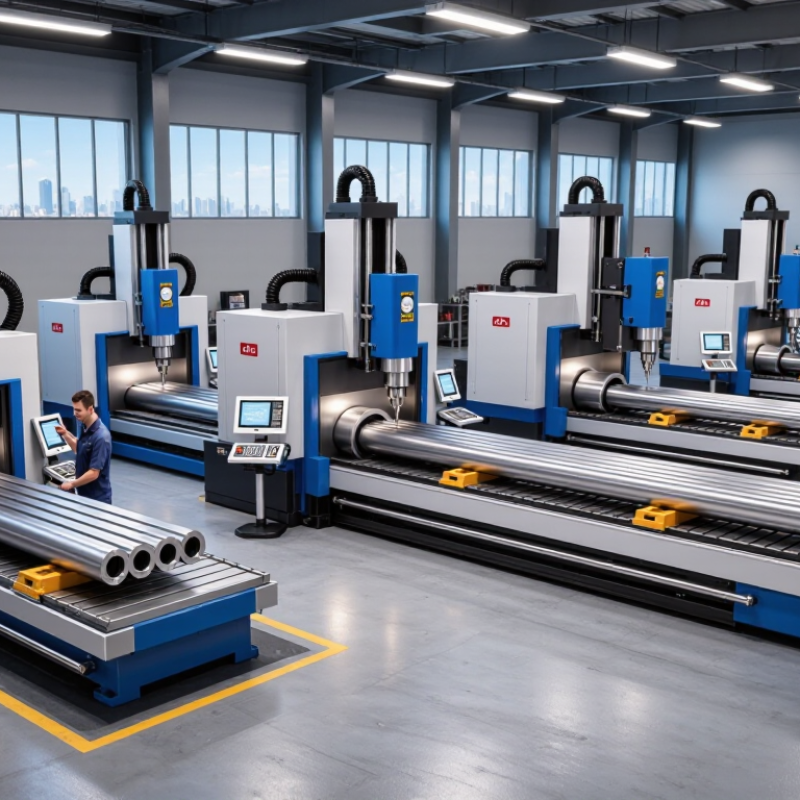
What Is a Deep Drill Machine and How Does It Work?
A deep drill machine creates accurate, narrow holes far deeper than conventional drilling equipment.
It is used for molds, hydraulic parts, shafts, and other components requiring reliable internal passages. Unlike ordinary drilling, it controls chip removal throughout the hole.
That detail matters.
The machine usually guides a long drill through a steady bushing. Cutting fluid enters the tool and cools the cutting edge. It also carries metal chips away from the hole. Depending on the design, the workpiece, tool, or both may rotate.
A rigid spindle maintains alignment while sensors monitor load, temperature, and vibration. Small changes in vibration can signal tool wear or poor chip flow. Operators should check these signs early.
Accuracy depends on more than the machine itself. Material hardness, drill geometry, feed rate, fluid pressure, and workpiece support all affect the result. In shop-floor trials, a small setup error can create noticeable hole deviation after several hundred millimeters.
No setup is perfect. That is worth remembering.
Experienced operators often begin with conservative settings, measure the first hole, and adjust gradually. Buyers should also examine service access, control clarity, spare-tool availability, and training support. A machine that looks powerful may still disappoint if maintenance is difficult or documentation is vague. Reliable performance comes from suitable design, careful operation, and repeatable inspection.
Key Features and Specifications Global Buyers Should Compare
7 Best Deep Drill Machines for Global Buyers
When comparing seven deep drill machines, buyers should examine drilling depth, maximum diameter, and spindle stability. A larger motor does not always produce better holes. Check spindle speed ranges, torque output, and feed control for the materials you process. High-speed settings suit smaller diameters, while deeper holes usually require steadier torque.
Worktable size matters. Measure your longest workpiece, then allow room for fixtures and coolant lines. Automatic chip removal can reduce stoppages, especially during continuous production. Look for rigid guideways, low-vibration construction, and a thrust system that maintains pressure evenly. Hole accuracy should be stated clearly, not hidden behind vague claims.
Electrical specifications need careful attention. Confirm voltage, frequency, phase, control-system compatibility, and local safety requirements before ordering. Coolant pressure, tank capacity, filtration, and pump access also affect daily maintenance. Ask for tested tolerances, inspection records, and a parts list. These documents show more reliability than polished photographs.
I have seen buyers focus too heavily on maximum depth. That can be a costly mistake. A machine rated for extreme depth may run poorly on short, repetitive holes. Compare cycle time, setup effort, operator access, and service response across suppliers. Remote support helps, but it cannot replace available technicians and common spare parts. Some specifications may still change after installation, so request written confirmation before payment.
7 Best Deep Drill Machines for Different Industrial Applications
7 Best Deep Drill Machines for Different Industrial Applications
Deep drill machines are selected by hole depth, diameter, material, and production volume. Gun drilling machines suit narrow, accurate holes in hydraulic blocks, shafts, and medical components. BTA deep hole drills handle larger diameters and remove chips efficiently from heavy steel parts. CNC deep hole machines support complex programs, repeatable positioning, and reduced setup time.
Trepanning machines create large holes while saving material from the core. Multi-spindle machines improve output when several identical holes require simultaneous drilling. Horizontal deep drilling machines work well with long shafts, cylinders, and engine components. Vertical machines can support stable loading for molds, dies, and oversized workpieces. In practice, the “best” machine depends on coolant pressure, tool stiffness, and chip control. A fast machine may still produce poor results when the workholding is weak. That detail is often underestimated.
Tips: Confirm the maximum drilling depth, hole tolerance, and workpiece weight before purchasing. Check spindle power, filtration, coolant capacity, and operator access. Ask for sample-hole testing with your actual material. Cutting data can change between stainless steel and alloy steel. Leave room for maintenance, too. Global buyers should also verify electrical standards, documentation, spare-part access, training, and local service response.
7 Best Deep Drill Machines for Different Industrial Applications
Typical maximum drilling depths vary by ground conditions, tooling, borehole diameter, and machine configuration. The comparison below presents representative depth ranges for common industrial drilling applications.
Depth figures are indicative industry ranges rather than guaranteed machine specifications.
How to Choose the Right Deep Drill Machine for Your Needs
7 Best Deep Drill Machines for Global Buyers
Choosing the right deep drill machine starts with the hole, not the brochure. Define diameter, depth-to-diameter ratio, material, tolerance, and production volume. The seven practical choices include single-spindle gun drills, multi-spindle gun drills, BTA machines, ejector drills, trepanning systems, CNC deep-hole boring machines, and mill-drill combinations. Gun drilling suits small diameters and precise passages. BTA systems handle larger holes but require stronger coolant flow. Trepanning removes less material, yet it needs careful tool alignment.
Check the machine’s spindle torque, bed length, workholding, coolant pressure, chip evacuation, and control system. ISO 230-2 provides a recognized method for evaluating positioning accuracy and repeatability. That matters when a deep hole must remain straight several meters below the surface. Deloitte’s 2024 Smart Manufacturing and Operations Survey reported that 86% of manufacturers view smart manufacturing as important for competitiveness. Therefore, remote monitoring and production data can be useful, but only when operators understand the readings.
Ask for test drilling with your actual material. Steel, titanium, and cast alloys behave differently. Request measured hole straightness, surface finish, cycle time, and tool consumption. A machine rated for 1,500 millimeters may perform poorly at that depth with your alloy. I have seen buyers focus on maximum depth and overlook loading space. That mistake becomes expensive. Service access, spare-tool availability, operator training, electrical standards, and local compliance also deserve equal attention. The cheapest machine is not always the safest choice. Sometimes, the wrong coolant system decides the result.
Global Buying Factors: Quality, Compliance, Cost, and Support
Choosing among seven deep drill machine types requires more than comparing spindle speed.
Gun drilling machines suit narrow, precise holes, while BTA systems handle larger diameters and deeper work. CNC deep-hole machines offer flexible programming for varied production. Trepanning systems can reduce material waste, but they may require more operator experience. Quality depends on spindle stability, coolant pressure, guide-bushing accuracy, and bed rigidity. Ask for sample-hole reports, runout measurements, and documented factory testing.
Compliance also matters for global buyers. Request electrical drawings, safety instructions, material certificates, and applicable conformity documents. Requirements differ by destination, so confirm them before signing. A low purchase price can become expensive after shipping, installation, tooling, training, and spare parts. I have seen buyers overlook transformer compatibility. That mistake delayed commissioning for weeks. Compare total ownership cost, not only the machine quotation. Check warranty coverage, remote diagnostics, response times, and the availability of replacement pumps and seals.
Tips: Require a test cut using your material and hole depth. Record surface finish, straightness, cycle time, and coolant consumption. Ask who will provide installation support in your region. Visit the factory if possible. Photos are helpful, but they cannot reveal vibration or poor assembly. Some evaluations remain uncertain, especially when production data is limited. Leave room for that uncertainty.