
10 Best Gasket Rings for Industrial Applications

Gasket Rings help industrial equipment contain pressure, isolate fluids, and withstand heat, vibration, and repeated loading. A ring that looks suitable on a workbench may fail when temperature swings, surface finish, or chemical exposure change. Material matters. So does geometry. Even a small mismatch can leave a visible leak path around a flange.

This guide examines 10 Best Gasket Rings for Industrial Applications, focusing on practical selection factors such as operating temperature, pressure, media compatibility, compression, and maintenance needs. A soft elastomer ring may suit a low-pressure water line, while a metal ring may be appropriate for demanding service when the joint design supports it. Check the equipment specifications, and confirm fit before installation. Details matter.

A concise engineering reminder for this topic is: “A gasket is only as reliable as the joint it seals.” No source material was supplied to verify a named expert’s quotation, so this line is original editorial wording—not an attributed statement. That distinction matters. Product claims should be checked against manufacturer data, test conditions, and the actual application. The comparison ahead offers a practical starting point, not a substitute for engineering review. Some choices still depend on details a shortlist cannot capture.
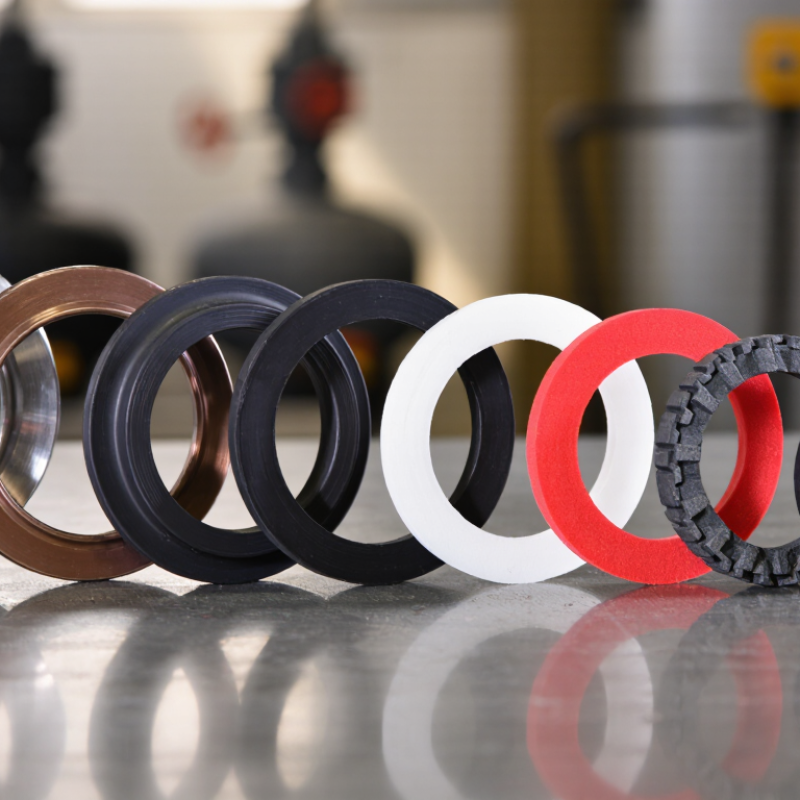
10 Best Gasket Rings for Industrial Applications

Define 10 Gasket-Ring Types Under ASME B16.20 and B16.21

ASME B16.20 covers metallic gaskets; ASME B16.21 covers nonmetallic flat gaskets. Together, they help specify dimensions and construction, not a universal “best” choice. Ten useful configurations include oval and octagonal ring-joint gaskets; spiral-wound gaskets without rings, with an outer ring, with an inner ring, or with both rings; metal-jacketed and corrugated-metal gaskets; and nonmetallic flat gaskets in full-face and ring styles. The exact construction must match the flange and service conditions.

Small details matter. A spiral-wound gasket’s centering ring helps locate it during installation, while its winding provides the sealing element. Ring-joint styles rely on controlled contact with matching flange grooves. B16.21 flat gaskets may suit different flange facings, but material compatibility still needs checking. Neither standard replaces engineering review of pressure, temperature, media, flange condition, or bolt loading.

The U.S. Department of Energy’s Improving Compressed Air System Performance sourcebook reports that leaks can waste 20–30% of compressed-air output. That figure covers system leaks broadly, not gaskets alone, but it shows why small sealing failures deserve attention. A practical caution: drawings may specify a gasket type without recording flange wear or installation history. That gap can complicate selection.

10 Common Gasket-Ring Forms in ASME B16.20 and B16.21

A standards-coverage guide to selected metallic and nonmetallic gasket forms.

Each bar indicates that the listed form is covered by the referenced standard; it is not a performance rating or market ranking. ASME B16.20 covers metallic gaskets, while ASME B16.21 covers nonmetallic flat gaskets. Confirm the applicable edition, materials, and flange requirements for a specific application.

Selected forms

  • Oval ring-joint: Metallic ring with an oval cross-section.
  • Octagonal ring-joint: Metallic ring with an octagonal cross-section.
  • Spiral-wound, winding only: Spiral-wound sealing element without inner or outer rings.
  • Spiral-wound, outer ring: Spiral-wound element with an outer centering ring.
  • Spiral-wound, inner ring: Spiral-wound element with an inner ring.
  • Spiral-wound, inner and outer rings: Spiral-wound element fitted with both rings.
  • Single-jacketed: Filler enclosed by a single metal jacket.
  • Double-jacketed: Filler enclosed by a double metal jacket.
  • Nonmetallic flat, full-face: Flat gasket extending across the flange face to the bolt holes.
  • Nonmetallic flat, ring-type: Flat gasket shaped to seal around the bore area.

Compare Gasket Materials by Temperature, Pressure, and Chemical Compatibility

Industrial gasket rings must match the service, not just the pipe diameter. Temperature, pressure, and fluid chemistry interact; a material that tolerates heat may still swell in the process fluid. Check operating and upset temperatures, including brief cleaning cycles. Small details matter.

EPDM often suits hot water and mild alkaline washdown, but oils can cause swelling.

Nitrile handles many petroleum oils well, yet may age quickly in ozone or hot air.

Some fluoroelastomer grades offer broader chemical and heat resistance, though strong solvents and amines can still be problematic.

PTFE resists many aggressive fluids and cleans easily, but it can creep under sustained load unless supported.

Graphite handles high heat, but oxidation and flange finish deserve attention.

Pressure is not a material property alone. Ring cross-section, hardness, groove depth, bolt load, and surface condition all affect sealing. At high pressure, check extrusion gaps and compression limits in the specific grade’s data sheet.

Check the fluid. Use its actual concentration and temperature, not just a generic chemical name; mixtures behave differently.

A chart can look reassuring, but an overlooked wash cycle can undo that confidence.

Match Ring-Joint Gaskets to API 6A Pressure Classes: 2,000–20,000 psi

For the 10 best gasket rings in industrial service, pressure class is only the starting point. API 6A equipment may be rated at 2,000, 3,000, 5,000, 10,000, 15,000, or 20,000 psi. Match the ring to the flange’s exact groove designation and pressure class; a gasket cannot raise the rating of the connection. Check the equipment documentation, not just a label on the ring.

Fit matters. A ring that is too hard can damage the flange groove, while the wrong profile may not seal reliably. R-style rings and BX-style rings are not interchangeable; confirm the specified type, dimensions, and material. Then consider fluid chemistry, temperature, and expected pressure cycles. Small details count: a nick on a sealing surface or grit left in a groove can undermine an otherwise correct match. Clean and inspect both faces before installation. It sounds simple, but rushed checks are easy to miss.

For sour, corrosive, or high-temperature service, verify material suitability against the actual operating conditions and applicable project requirements. Follow the equipment maker’s installation procedure and use qualified personnel. Pressure tables help, but they do not tell the whole story. Even a carefully selected ring deserves a second check before the connection is made.

10 Best Gasket Rings for Industrial Applications — Match Ring-Joint Gaskets to API 6A Pressure Classes: 2,000–20,000 psi

No. Configuration API 6A Working Pressure Class Ring-Joint Style Typical Material Options Typical Application Key Selection Check
1 Standard-pressure, oval-profile ring 2,000 psi R, oval Low-carbon steel; soft iron where specified General-purpose sealing on compatible ring-joint flanges and equipment. Confirm the flange groove is designed for an oval R ring and match the ring number to the flange size.
2 Standard-pressure, octagonal-profile ring 2,000 psi R, octagonal Low-carbon steel; stainless steel grades selected for the service Flange connections whose groove geometry is specified for an octagonal R ring. Oval and octagonal profiles are not interchangeable unless the applicable flange and gasket specifications permit it.
3 Intermediate-pressure, oval-profile ring 3,000 psi R, oval Low-carbon steel; corrosion-resistant alloy selected for the fluid API 6A connections designed for the 3,000 psi class in compatible sizes. Verify pressure class, flange size, groove finish, and gasket material against the equipment documentation.
4 Intermediate-pressure, octagonal-profile ring 3,000 psi R, octagonal Low-carbon steel; 316 stainless steel where suitable Octagonal-groove connections used in production and wellhead equipment. Check that the ring material meets the required hardness relationship to the flange groove.
5 Higher-pressure, standard R ring 5,000 psi R, profile as specified for the flange Low-carbon steel; stainless or other compatible alloy 5,000 psi class connections designed for the corresponding R-series ring and groove. Use only the profile and ring number specified for the actual flange; do not select by pressure class alone.
6 Pressure-energized ring configuration 5,000 psi RX, only with a compatible specified groove Low-carbon steel; corrosion-resistant alloy selected for service conditions Compatible connections where the pressure-energized RX design is specified. Confirm RX compatibility with the flange groove and assembly requirements; do not assume it replaces every R ring.
7 High-pressure compact ring configuration 10,000 psi BX Low-carbon steel; corrosion-resistant alloy selected for service conditions High-pressure API 6A connections designed for BX grooves. BX rings require matching BX grooves and are not interchangeable with R or RX rings.
8 Very-high-pressure compact ring configuration 15,000 psi BX Low-carbon steel; alloy selected for corrosion and temperature requirements 15,000 psi class wellhead and pressure-control equipment with compatible BX connections. Verify the exact API 6A flange size, BX ring designation, material, and equipment pressure rating.
9 Maximum-class compact ring configuration 20,000 psi BX Low-carbon steel or a qualified corrosion-resistant alloy 20,000 psi class equipment manufactured with the matching BX groove design. Check all component ratings and use the specified BX ring number; the gasket alone does not determine assembly pressure rating.
10 Corrosion-service compact ring configuration 10,000–20,000 psi, as rated by the equipment BX 316 stainless steel or another compatible alloy, subject to hardness and service requirements High-pressure connections where fluid compatibility or corrosion resistance is a design consideration. Confirm alloy suitability for the specific medium, temperature, and sour-service requirements; verify hardness and dimensional compliance.

Selection note: API 6A pressure classes are nominal working-pressure ratings. The correct ring style, ring number, material, and groove compatibility depend on the flange size, design, and applicable API 6A edition. Consult the equipment documentation and applicable standard before installation; do not mix BX rings with R or RX grooves.

Rank Spiral-Wound, Metallic, PTFE, Graphite, and Elastomer Designs

A useful gasket ranking starts with service conditions, not material labels. For mixed industrial duties, spiral-wound rings often rank first because alternating metal windings and filler handle pressure and temperature changes well. They need even bolt loading and suitable flange surfaces. Fit matters.

Solid metallic rings rank highly for severe pressure and heat, especially in properly machined joints. Their performance depends on accurate alignment; a small surface defect can undermine sealing. Graphite rings suit hot service and accommodate minor flange irregularities, but oxidation and handling damage deserve attention.

PTFE ranks strongly where chemical resistance is critical, including corrosive process fluids. Under sustained compression, however, it can creep, so design limits and retightening guidance matter. Elastomer rings are practical for lower-pressure joints, pumps, and equipment with vibration. Match the compound to the fluid and operating temperature; “rubber” is not one material. Not always. In real maintenance work, the best choice may be less obvious than a chart suggests. Verify pressure, temperature, media, flange condition, and installation procedure before selecting a ring.

Verify Flange Fit Across ASME B16.5 Pressure Classes 150–2500

A gasket ring can look correct on a workbench and still fail to seat properly between flanges.

Check the flange size, facing, pressure class, and applicable ASME B16.5 dimensions before selecting a ring. Classes 150 through 2500 cover very different flange designs; class alone does not confirm a gasket fit. Material, temperature, and operating conditions also affect the pressure-temperature rating.

Measure the inside and outside diameters, then compare them with the flange bore and sealing face. For raised-face flanges, confirm the ring sits within the intended seating area and does not obstruct the bore. Ring-type joint designs need the correct groove profile and matching ring geometry.

Small details matter. A useful check is to compare the flange drawing, gasket specification, and installation requirements—not just the nominal pipe size.

ASME B16.5 defines flange dimensions and ratings; gasket dimensions may fall under a separate standard, depending on the ring type. It is easy to assume these references align automatically. They do not always. Record the verified class, facing, dimensions, and material before ordering or installation.

Scroll to Top