
China Best Tire Balance Bead Supplier?

I can write the introduction, but no article or expert quotation was provided. To avoid inventing a specialist or falsely attributing a quote, please share the expert’s name and exact quotation, or allow an clearly labeled original editorial quote.
China Best Tire Balance Bead Supplier?

What Tire Balance Beads Are and How They Work

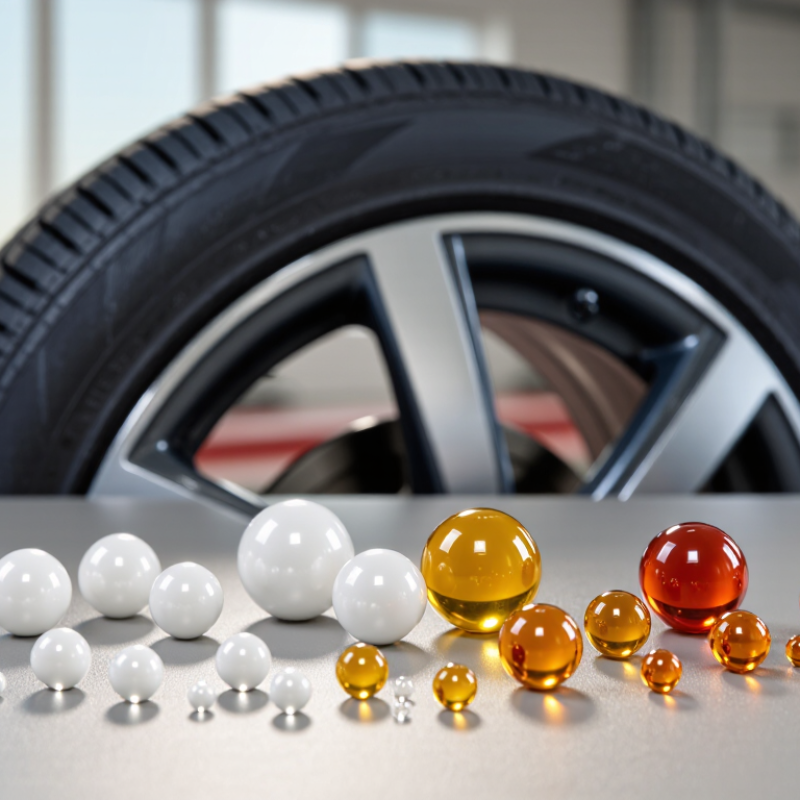
Tire balance beads are small, free-moving particles placed inside a tire during mounting. They may be made from glass or ceramic, and the correct material and quantity depend on the tire and wheel setup. Unlike fixed weights attached to a rim, beads move as the tire rotates.

At speed, centrifugal force distributes the beads along the tire’s inner surface. They tend to collect near areas that help counter uneven mass, reducing vibration when the setup is suitable. The distribution can adjust as tread wears, though results vary with tire construction, speed, and bead quantity.

Not magic. A poor fit can still shake.

Before installation, check the tire maker’s guidance and use a measured amount; too many beads may cause clumping or inconsistent balance. Keep the tire and rim clean and dry, since moisture or sealant can affect movement. If vibration remains, inspect for uneven wear, wheel damage, or mounting problems rather than adding more beads. It is a practical method, but not a substitute for diagnosis. A dependable supplier should provide clear sizing guidance and product specifications.

Key Qualities of a Reliable Chinese Tire Balance Bead Supplier

China Best Tire Balance Bead Supplier?

Key Qualities of a Reliable Chinese Tire Balance Bead Supplier

A reliable supplier should explain how its tire balance beads are made, checked, and packed. Ask for bead-size specifications, material details, and inspection records. Consistent particle size matters: uneven beads may distribute poorly inside a tire. Small details matter. Look for controlled production processes and clear batch identification, so any quality concern can be traced to a specific shipment. A neat sample is useful, but it cannot replace repeatable checks across full orders.

Technical support is another practical measure. A knowledgeable supplier can discuss tire and vehicle applications, installation guidance, and storage conditions without promising one product suits every setup. Request samples, then check for visible dust, clumping, or damaged packaging. Ask how the supplier handles product changes and customer complaints. Clear answers are a good sign. Vague claims are not. Compare lead times, export packing, and order documents alongside price; the cheapest quote may omit useful quality controls. Even strong suppliers can have occasional inconsistencies, so agree on written specifications and an inspection process before placing a large order. Reliable communication helps resolve small issues before they affect delivery.

How Tire Balance Beads Are Manufactured and Quality-Tested

China Best Tire Balance Bead Supplier?

How Tire Balance Beads Are Manufactured and Quality-Tested

Reliable tire balance beads begin with controlled raw materials, not a polished sales claim. Depending on the product, manufacturers form glass or ceramic media, then dry, screen, and sort each batch by particle size. Oversized pieces and excess dust can interrupt flow inside a tire. Small defects matter. Technicians typically inspect samples for size distribution, shape, surface damage, moisture, and contamination. Calibrated sieves and scales help make results repeatable. A useful quality record also identifies the batch, test method, equipment, and operator. There is no single tolerance that suits every bead design; specifications should match the intended tire and installation method.

Quality checks should test function, too. A flow test can reveal clumping, while abrasion testing can show whether handling creates unwanted fines. Manufacturers may also check packaging seals and repeat tests across production lots. In its 2021 Scrap Tire Management Report, the U.S. Tire Manufacturers Association estimated that about 71% of U.S. scrap tires entered recycling or beneficial-use markets. That figure describes scrap-tire management, not bead performance, but it highlights why material claims need clear documentation. One weakness in many product comparisons is that test conditions are missing. Without them, two results may not be comparable. A careful supplier should share the test method and representative batch data, including occasional failures—not only its best sample.

How to Compare Supplier Capabilities, Certifications, and Products

When comparing a tire balance bead supplier, examine manufacturing capability as closely as price. Ask for batch traceability, material specifications, particle-size distribution, moisture controls, and documented production checks. Request test results for flow, abrasion, and heat exposure, then evaluate a sample using the supplier’s recommended installation method. A certificate should show its scope, issuing body, and validity. A logo alone proves little. Check whether repeat orders maintain consistent particle size and packaging. Small differences may affect handling.

Treat certifications as evidence, not a substitute for technical review. Verify quality-system certificates with the issuing body and confirm they cover the actual manufacturing site. The U.S. Department of Energy’s FuelEconomy.gov reports that underinflation can reduce fuel economy by about 0.2% for each 1 psi drop in average tire pressure. That figure concerns tire pressure; it does not prove balance beads save fuel. Be cautious of claims that blur the distinction. Ask for application guidance by tire size, load, and operating speed. One test is never the whole story.

Tips: Compare current certificates, recent batch inspection records, and a sealed sample side by side. Note particle consistency, dust, packaging condition, and performance during installation. Ask who investigates complaints and how replacement batches are checked. Keep your own records. A neat sample may not represent every production run.

Steps for Evaluating and Sourcing Tire Balance Beads from China

China Best Tire Balance Bead Supplier?

Steps for Evaluating and Sourcing Tire Balance Beads from China

Start with a written specification: bead material, size range, moisture resistance, packaging weight, and compatible tire types. Ask suppliers for batch test reports, a certificate of analysis, and clear lot-traceability details. Small details matter. A sample may look consistent in a jar, yet vary across production batches. Request samples from more than one lot, then check flow, dust, and packaging seals before discussing volume.

Market size helps explain why careful sourcing matters, but it does not prove a product works. The U.S. Tire Manufacturers Association’s 2024 shipment forecast estimated 338.6 million U.S. tire shipments. That is useful industry context, not evidence that balancing beads improve performance. Ask the supplier for test methods and results, then arrange an independent comparison using the same tire and wheel setup. Record vibration readings at set speeds. Ask for evidence.

Also assess the factory’s quality controls, response time, and willingness to explain rejected batches. Confirm minimum order quantities, lead times, inspection arrangements, and shipping terms in writing. Have a third party inspect the goods before dispatch if the order is substantial. A polished catalog still proves little; I would not treat appearance as performance. Even a promising trial can miss real-world variation, so keep the acceptance criteria specific and retain samples from each delivered lot.

Scroll to Top