China Top 10 CNC Machining Parts for Global Buyers?
As the global manufacturing landscape evolves, CNC machining parts have become pivotal. These components are essential for a wide range of industries, including aerospace, automotive, and medical sectors. China stands out as a leading hub for high-quality CNC machining parts, offering innovative solutions at competitive prices.
In exploring China’s top ten CNC machining parts, it’s crucial to consider factors like material quality, precision, and reliability. Buyers must evaluate suppliers thoroughly. This process can be challenging, as not all manufacturers meet international standards. Yet, finding the right partner can lead to enhanced production efficiency and improved product outcomes.
Understanding the nuances of CNC machining parts entails a commitment to research and industry knowledge. The landscape can be complex, with varying technologies and capabilities. Buyers should be aware of the common pitfalls in sourcing to maximize their investment. Embracing this journey requires patience and a willingness to learn from missteps, aiming for continuous improvement in quality and performance.
Overview of CNC Machining in China
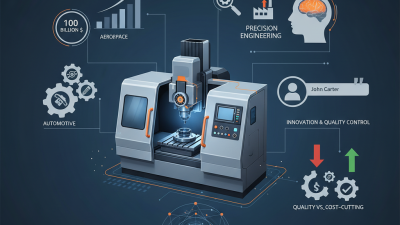
CNC machining plays a crucial role in China's manufacturing landscape. With a market size expected to surpass $100 billion by 2025, the sector continues to grow rapidly. China's advanced technology and skilled workforce contribute to its position as a global leader in precision machining. This includes sectors like aerospace, automotive, and medical devices, where precise components are essential.
Recent reports indicate that around 25% of all CNC machined products are exported, highlighting China's global influence. Companies strive to adopt the latest technologies, such as automation and AI, to improve efficiency. However, challenges like rising production costs and environmental regulations need careful navigation. Balancing quality and cost-effectiveness requires ongoing reflection from manufacturers.
Understanding the importance of quality assurance is vital. A meticulous approach to inspections can prevent costly errors. Buyers should consider visiting facilities to assess capabilities firsthand. Establishing strong partnerships with local suppliers can enhance reliability and responsiveness. Developing clear communication channels can bridge any gaps in expectations. Engaging with the right experts ensures better decision-making in sourcing CNC parts.
China Top 10 CNC Machining Parts for Global Buyers
| Part Type |
Material |
Application |
Tolerance (mm) |
Lead Time (Days) |
Annual Capacity |
| Bracket |
Aluminum 6061 |
Automotive |
±0.02 |
15 |
10,000 pcs |
| Chassis |
Stainless Steel 304 |
Electronics |
±0.03 |
20 |
5,000 pcs |
| Gear |
Brass |
Machinery |
±0.01 |
10 |
8,000 pcs |
| Valve Body |
Aluminum Alloy |
Aerospace |
±0.02 |
30 |
15,000 pcs |
| Brackets |
Plastic Polycarbonate |
Consumer Goods |
±0.05 |
25 |
12,000 pcs |
| Housing |
Aluminum 7075 |
Telecommunications |
±0.015 |
22 |
6,000 pcs |
| Mounting Plate |
Mild Steel |
Construction |
±0.03 |
35 |
7,500 pcs |
| Connector Housing |
Nylon |
Electrical |
±0.02 |
18 |
9,000 pcs |
| Screw |
Stainless Steel |
Fasteners |
±0.01 |
12 |
20,000 pcs |
| Pulley |
Plastic ABS |
Robotics |
±0.02 |
14 |
11,000 pcs |
Top Materials Used in CNC Machining Parts
CNC machining is a vital process in manufacturing. Different materials are extensively used, each with unique properties. Aluminum is a popular choice for its lightweight nature and corrosion resistance. According to industry data, aluminum alloys account for nearly 60% of CNC machining parts due to their versatility.
Steel is another commonly used material. It offers high strength and durability, making it ideal for heavy-duty applications. Reports indicate that alloy steels are particularly favored in fabrication, thanks to their improved characteristics. Plastic materials are increasingly popular as well. Materials like acrylic and nylon are utilized when weight is a concern, yet strong performance is needed.
However, relying too heavily on a single material can lead to constraints. While certain materials may excel in specific applications, they might not suit others. Choosing the right material requires careful analysis. Global trends show a drive toward sustainable materials and practices. Manufacturers are beginning to explore biodegradable options. This shift may redefine standard practices in CNC machining. Adapting to changing demands is essential for long-term success.
Key Industries Utilizing CNC Machined Components
CNC machined components play a vital role in various industries. For instance, the aerospace sector relies heavily on precision machining. It ensures that each part meets strict safety and reliability standards. The use of lightweight materials and complex geometries is prevalent in this field. However, sourcing these components can sometimes be challenging due to strict regulations and quality assurance requirements.
Another key industry utilizing CNC machining is automotive manufacturing. Here, components must endure high levels of stress and wear. CNC machining allows manufacturers to create parts that meet these demands precisely. However, achieving the right balance between cost and quality can be tricky. Companies often face the dilemma of investing in advanced technology versus keeping production costs low.
Additionally, electronics is an industry where CNC machining thrives. Here, the need for tiny, intricate parts is critical. Precision is non-negotiable, and any mistake can lead to product failure. Yet, as demand grows, so does the pressure to maintain high quality while scaling production. This can lead to potential pitfalls, highlighting the importance of constant evaluation and adaptation.
China Top 10 CNC Machining Parts for Global Buyers
This chart illustrates the market demand for various CNC machining parts produced in China, highlighting the significant industries that rely on these precision components. The data represents the estimated annual demand in units for each category.
Leading Chinese Manufacturers of CNC Machined Parts
China has emerged as a powerhouse in the CNC machining industry. Leading manufacturers offer a variety of precision machined parts. These factories are often equipped with modern technology and skilled workers. Many specialize in industries like automotive and aerospace. They provide custom solutions to meet global standards.
However, not all manufacturers are the same. Some lack proper certifications, raising concerns about quality. Buyers should evaluate the experience of each manufacturer. Assessing client reviews can help gauge reliability. Inspecting sample products is also crucial. Many buyers overlook this step, which can lead to costly mistakes.
Investment in research and development is vital for reputable firms. Continuous improvement in machining processes often results in better precision and efficiency. However, some companies may struggle to keep up with evolving technology. Buyers must consider these factors when selecting a manufacturer. Understanding these nuances helps forge better partnerships.
Market Trends and Future Prospects for Global Buyers
The global CNC machining market has seen significant shifts in recent years. As manufacturing technology evolves, buyers are increasingly seeking high-quality, precise parts. This trend has led to rising demands for CNC machined components across various industries, such as aerospace, automotive, and medical devices. Buyers now prioritize vendors who can provide durable and efficient machining solutions that meet stringent specifications.
There is a growing focus on automation and smart manufacturing.
Advanced technologies like AI and IoT are becoming integral in CNC machining processes. These developments can enhance both productivity and precision. However, not all suppliers have adapted at the same pace. This inconsistency can create challenges for buyers in sourcing reliable partners. Transparency in manufacturing processes is crucial for building trust.
Sustainability is emerging as a significant factor in purchasing decisions. Companies are keen on materials and practices that minimize environmental impact. Yet, some manufacturers still struggle to implement sustainable practices. This gap can lead to buyers needing to make difficult decisions. Understanding industry trends can empower businesses to navigate these complexities more effectively.