
How to Choose a Fuel Pump Carbon Commutator in 2026?

Choosing a Fuel Pump Carbon Commutator in 2026 means balancing electrical performance, wear life, and manufacturing consistency. The global vehicle market remains substantial: OICA reported approximately 93.5 million vehicles produced in 2023. Meanwhile, the International Energy Agency reported nearly 14 million electric-car sales that year. These figures provide market context, not a direct forecast for fuel-pump demand. They do, however, underline why component selection should reflect the intended vehicle platform and service life.

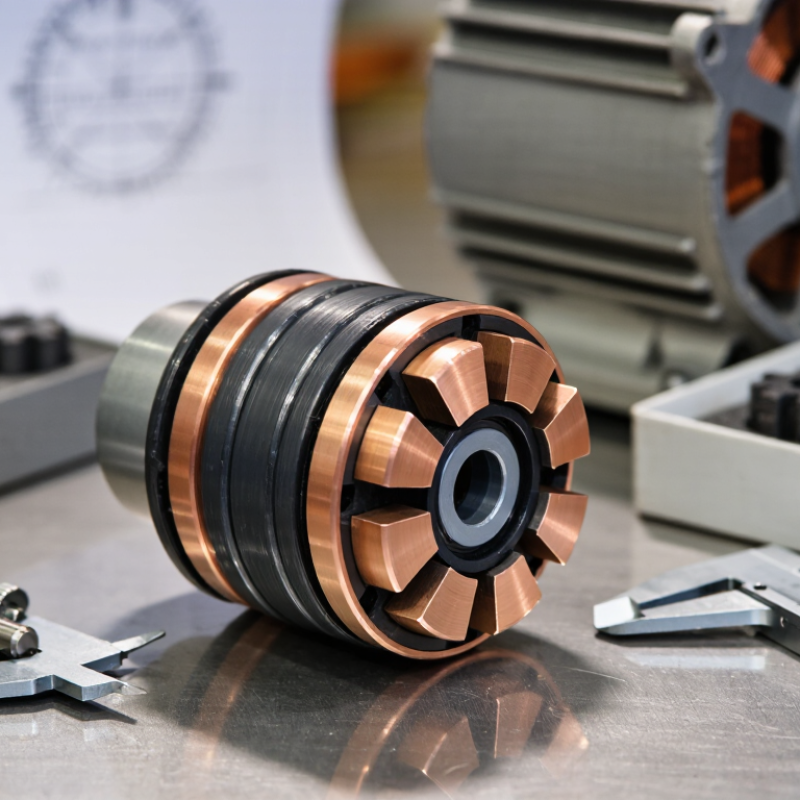
The details matter. A commutator may look like a small copper-and-carbon assembly, yet brush contact, surface finish, heat, and dimensional stability can affect pump current and durability. R. Krishnan, author of Electric Motor Drives, provides a useful engineering perspective: motor design must match the machine to its operating conditions. This is a paraphrase of his technical approach, not a direct quotation. A verifiable, topic-specific quotation from a named fuel-pump commutator specialist was not available, so assigning one would be misleading. In practice, compare the commutator’s material specification, runout, contact surface, and test results against the pump’s actual load and temperature range. Ask suppliers for traceable data, not just a catalog claim. Small tolerances matter. No single material wins everywhere; that point deserves scrutiny. A well-chosen Fuel Pump Carbon Commutator should be assessed as part of the complete motor assembly, with evidence from repeatable testing guiding the final decision.
How to Choose a Fuel Pump Carbon Commutator in 2026?

Understand the Role of a Carbon Commutator in a Fuel Pump

Understand the Role of a Carbon Commutator in a Fuel Pump

A fuel-pump motor needs a reliable path for current as its armature spins. In a carbon-commutator design, the rotating contact transfers current through the brush assembly, helping the motor keep turning.

Contact quality matters. Uneven wear, poor alignment, or unsuitable material can increase resistance, heat, and electrical noise. In an in-tank pump, components may also face fuel exposure and repeated temperature changes, so material compatibility and sealing deserve close attention.

The scale is substantial: OICA’s 2024 production statistics report roughly 92.5 million vehicles built worldwide. That figure does not measure commutator failures, but it highlights why repeatable component quality matters across high-volume automotive production.

When assessing a replacement, compare dimensions, segment geometry, conductivity, wear resistance, and compatibility with the specified brushes and operating environment. Check the pump maker’s engineering requirements, too. A datasheet helps, but it cannot capture every real-world variation; I would not treat one attractive conductivity number as proof of durability.

Small details matter. A rough contact face may behave differently after thousands of starts, and test conditions may not match actual pump temperatures.

Identify the Pump’s Electrical and Mechanical Requirements

Before selecting a carbon commutator, map the pump’s electrical load across real operating conditions. Record nominal voltage, startup current, steady current, and brief peak current with the pump installed. A bench reading alone can miss voltage drop through wiring and connectors. SAE J537’s cold-cranking test evaluates a 12-volt battery at −18°C, using 7.2 volts as a key voltage threshold after 30 seconds. That is a battery test, not a pump rating, but it highlights why low-voltage starting deserves attention. Check the motor’s actual operating limits against vehicle supply conditions; ISO 16750-2 provides automotive electrical-supply test guidance.

Mechanical fit matters just as much. Measure the commutator diameter, segment count, shaft interface, and permitted runout, then compare them with the original assembly drawing. Small geometry errors can create uneven brush contact, local heating, or accelerated wear. Confirm brush grade and spring force under operating temperature, not only at room temperature. Also check whether the commutator’s binder and insulation tolerate the pump’s fuel exposure. Details get missed here. A practical validation uses current, temperature, and vibration measurements during repeated starts and sustained operation. Keep test conditions documented, including fuel temperature and supply voltage. One imperfect assumption to challenge: matching the old part’s dimensions does not prove its material or current capacity is suitable for a revised pump design.

How to Choose a Fuel Pump Carbon Commutator in 2026? — Identify the Pump’s Electrical and Mechanical Requirements

Selection guide: Use the original component drawing, motor specifications, and application test requirements as the final authority. The ranges below are screening examples, not universal design limits.

Requirement What to identify Useful data or screening example Why it matters when choosing
Supply voltage Nominal vehicle electrical system and the voltage range the pump must tolerate during operation. Common systems include 12 V and 24 V. Record the pump’s specified operating range and applicable vehicle voltage-transient requirements. Voltage affects motor speed, current, commutation, heating, and arcing. Select a commutator grade and construction validated for the actual motor duty cycle.
Motor current and load Steady-state current, start-up current, peak current, and pump load at relevant fuel pressure and flow conditions. Measure or obtain values at the specified voltage and hydraulic operating points; do not infer current from nominal voltage alone. Current and contact conditions influence electrical loading and wear. The commutator and brush system should be qualified together at the real operating load.
Commutation layout Segment count, segment pitch, riser or connection style, insulation gaps, and armature connection method. Match the production drawing and original part geometry. Confirm the segment sequence and electrical connections before manufacture. Incorrect segment layout or connection can cause poor brush contact, uneven current distribution, excessive sparking, or motor failure.
Commutator dimensions Outside diameter, bore or shaft fit, axial length, riser dimensions, and critical tolerances. Measure against the component drawing or a verified sample. Specify tolerances and inspection methods for each critical feature. Dimensional mismatch can cause an interference fit, looseness, brush misalignment, or inadequate clearance inside the motor.
Runout and concentricity Commutator surface runout relative to the shaft or armature datum, plus concentricity after assembly. Use the drawing’s limits and measurement datum; check the assembled rotor where required. Excessive runout can make brush contact intermittent, increase vibration and noise, and accelerate localized wear.
Carbon grade and brush pairing Commutator material specification, brush grade, contact pressure, surface finish, and wear characteristics. Choose a documented grade compatible with the existing brush and motor design. Confirm performance through a representative endurance test. Carbon grades differ in conductivity, strength, friction, and wear. A commutator cannot be selected reliably without considering its mating brush.
Rotational speed and duty cycle Operating speed range, starts per hour, continuous or intermittent operation, and expected service life. Record the pump’s rated and maximum operating conditions from its specification or validated test profile. Speed and cycling affect brush transitions, frictional heating, and cumulative wear. Test at the application’s most demanding operating points.
Fuel and chemical exposure Fuel type and blend, additives, moisture exposure, and any lubricants or assembly materials that contact the commutator. Validate the complete material system in the intended fuel and exposure conditions; compatibility depends on the specific formulation and construction. Fuel exposure can affect insulation, bonding materials, and nearby components. A material suitable for one fuel application may not suit another.
Temperature range Minimum and maximum temperatures at the motor, including fuel temperature, start-up, and heat-soak conditions. Use the application specification and test profile rather than relying on a generic ambient-temperature rating. Temperature can change material properties, clearances, bonding performance, and wear. Verify the assembly across the required temperature range.
Rotor balance and retention Commutator retention on the armature, bonding or mechanical retention method, and rotor balance requirements. Follow the armature drawing and assembly process; inspect retention and balance to the specified production criteria. Inadequate retention or imbalance can lead to vibration, noise, loss of alignment, or component failure at operating speed.
Validation and quality controls Electrical continuity, dimensional inspection, surface condition, commutation behavior, and endurance-test acceptance criteria. Define measurable limits from the pump specification and production control plan; test representative assemblies under application conditions. Incoming dimensions alone do not establish service suitability. System-level testing checks the commutator, brushes, armature, and pump together.

Compare Carbon Grades, Conductivity, and Wear Resistance

Choosing a fuel pump carbon commutator starts with its electrical load and operating environment. A highly conductive grade can reduce voltage loss and heat at the contact surface. But conductivity alone does not predict service life. Small differences matter.

Carbon grades vary in structure, hardness, and binder composition. Softer grades may maintain contact on a slightly uneven surface, yet can wear faster. Harder grades may last longer in some designs but could increase brush wear or contact noise. Ask for grade data and test results under conditions close to your pump’s current, speed, and temperature. A datasheet is useful, but it cannot tell the whole story.

Wear resistance depends on more than the carbon itself. Brush pressure, commutator finish, motor alignment, and fuel exposure all affect performance. Compare resistance and wear measurements taken with the same test method; figures from different methods may mislead. Check whether the material is compatible with the intended fuel and temperature range. If possible, run a controlled endurance test and inspect the surface for grooves, dust, or uneven wear. I would not choose a grade from one conductivity number alone. Some trade-offs only become clear after testing.

Check Dimensions, Brush Compatibility, and Manufacturing Quality

Choosing a fuel pump carbon commutator starts with matching its dimensions to the motor, not relying on a visual estimate. Measure the outer diameter, bore, axial thickness, and segment count against the original part or a verified drawing. Check the shaft fit and segment spacing, too. A small mismatch can cause uneven contact or vibration. Measure twice.

Brush compatibility matters just as much. Confirm the brush material, contact width, spring pressure, and operating current are suitable for the commutator. A brush that is too wide may bridge segments; one that is too narrow can wear unevenly. Look for smooth contact surfaces and consistent seating. Test fit matters.

Manufacturing quality is easier to judge with specific checks. Ask for dimensional inspection records, runout limits, and evidence of consistent segment bonding and surface finishing. Inspect samples for chips, loose segments, rough edges, or inconsistent spacing. These defects may be subtle at first. In practical sourcing, a supplier’s inspection process can be more informative than a polished product photo, though paperwork alone cannot prove performance. Compare more than one sample when possible, and record any differences. I would not assume an old part is a perfect reference; it may already be worn or distorted.

How to Choose a Fuel Pump Carbon Commutator in 2026

Suggested evaluation emphasis for comparing a commutator with the pump’s specifications.

The percentages are a practical checklist weighting, not measured industry data. Confirm commutator diameter, height, shaft fit, and segment layout against the specific pump drawing; check brush material and contact geometry; and review runout, surface finish, and electrical test records against the supplier’s stated specifications.

Verify Testing, Safety Standards, and Supplier Support for 2026

How to Choose a Fuel Pump Carbon Commutator in 2026?

Verify Testing, Safety Standards, and Supplier Support for 2026

A carbon commutator can pass a short bench test and still wear unevenly in a hot, vibrating pump. Ask suppliers for test conditions, sample size, and raw results—not just a certificate. Check brush-contact wear, electrical resistance, temperature rise, and performance after vibration and humidity exposure.

ISO 16750 provides automotive environmental test methods; confirm which parts apply to the pump assembly and its actual operating profile. Ask for raw data.

A certificate alone is not enough.

Supplier quality matters after approval, too. Request lot traceability, change-control procedures, failure-analysis timelines, and a clear contact for urgent technical questions. IATF 16949 describes automotive quality-management requirements; it is not a product safety certificate.

The IEA’s Global EV Outlook 2024 reports nearly 14 million electric car sales in 2023, about 18% of global car sales. That figure does not measure fuel-pump demand, but it does underline a shifting vehicle market. I would review the supplier’s capacity and support plans rather than assume today’s volumes will hold.

One detail is easy to miss: agree in writing how rejected samples and corrective actions will be handled.

Scroll to Top