How to Choose the Right Artificial Lift Technologies for Oil Production?
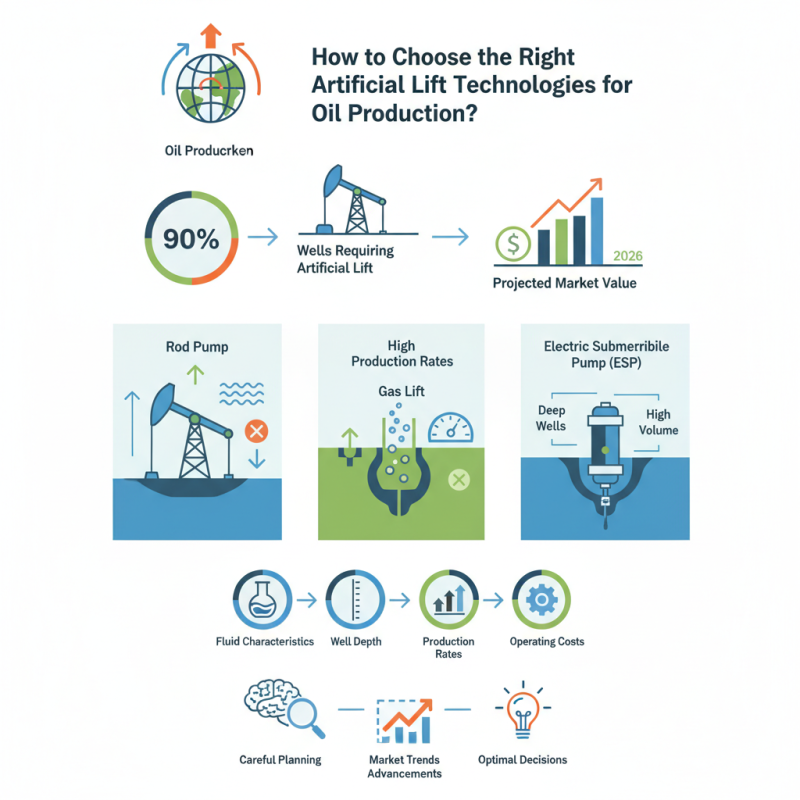
In today's oil production landscape, selecting the right Artificial Lift Technologies is crucial. Industry reports indicate that approximately 90% of oil wells require some form of artificial lift. This technology significantly enhances production rates, especially in aging fields. The global artificial lift market is projected to reach $30 billion by 2026, underscoring its importance.
Choosing the proper method from options like rod pumps, gas lift, or electric submersible pumps is not straightforward. Each technology has its pros and cons. Rod pumps may be ideal for shallow wells but struggle with high-viscosity fluids. Gas lift systems work well at high production rates but are less effective in low-pressure wells.
Focusing solely on initial costs can lead to overlooking long-term performance. Factors like fluid characteristics, well depth, and production rates must be considered. Misjudgments can result in suboptimal production and increased operating costs. Understanding market trends and technology advancements is necessary. The journey toward optimal artificial lift decisions requires careful planning and reflection.
Factors Influencing the Selection of Artificial Lift Technologies
Selecting the right artificial lift technology for oil production is crucial. Various factors influence this decision. Understanding the reservoir characteristics is essential. Reservoir pressure, temperature, and fluid properties shape the choice of technology. For instance, high gas-to-oil ratios may suggest using gas lift systems. These systems efficiently manage gas production alongside oil extraction.
Economic considerations are also vital. The cost of installation and maintenance must align with production forecasts. Investing in advanced technologies can improve efficiency but may require significant upfront capital. Operators must analyze potential returns. Evaluating local regulations and environmental impact is just as important. Compliance can affect operational feasibility and costs.
Finally, the operational philosophy plays a role. Some companies prioritize flexibility over efficiency. Others may focus on maximizing immediate output. The decision-making process can be reflexive. Oftentimes, operators may overlook simpler solutions in favor of complex systems. Regularly revisiting strategies can reveal new insights. Adjustments can lead to better alignment with current production goals.
Comparison of Different Artificial Lift Technologies
Types of Artificial Lift Technologies in Oil Production
Artificial lift technologies play a crucial role in enhancing oil production. They are essential for wells with declining reservoir pressure. There are several types, each suited for particular conditions. The choice often depends on reservoir characteristics and economic factors.
One of the most common methods is rod pumping. It is simple and effective, using a mechanical rod to lift fluid to the surface. Recent industry data indicates that nearly 60% of the world’s oil is produced using rod lift systems. However, it may not be efficient for deeper wells or high-viscosity fluids. Continuous improvement and innovation in this area are needed.
Another technology is electric submersible pumps (ESPs). They are capable of handling larger volumes, making them ideal for high-production wells. According to a recent report, ESPs can improve production rates by as much as 80%. However, their high installation and maintenance costs can be a barrier for some operators. It is important to regularly evaluate the cost-benefit ratio of using ESPs in long-term applications.
Gas lift is yet another approach that utilizes gas injected into the production stream. This method can enhance recovery in various well conditions. Yet, it requires a constant source of gas and may complicate operations. As the industry advances, ongoing assessment of each technology's efficiency and suitability is crucial for maximizing oil production.
Key Performance Indicators in Evaluating Lift Systems
Evaluating performance is critical when choosing artificial lift technologies. Key performance indicators (KPIs) can guide operators in making informed decisions. For instance, production rate and efficiency are vital metrics. Studies show that inefficient lift systems can reduce oil recovery by up to 30%. This underlines the importance of monitoring performance.
Another essential KPI is uptime. Systems that frequently fail can lead to significant downtime. A report found that lifting systems with an uptime below 85% can be costly. Operators lose time and resources when equipment malfunctions. Maintenance costs can spiral when systems are not performing optimally. This reality emphasizes the need for reliable technologies and regular performance evaluations.
Finally, energy consumption should not be overlooked. A system that uses excessive energy may not be sustainable. Reports indicate that optimized lift systems can reduce energy consumption by 20% or more. This can lead to substantial savings over time. However, many operators struggle to find the right balance between performance and cost. It requires critical analysis and ongoing assessment to achieve the best results.
Economic Considerations for Artificial Lift Implementation
When considering artificial lift technologies, economics play a crucial role. The upfront costs can be significant, but long-term gains often justify the investment. It’s essential to assess the initial installation expenses and ongoing operational costs. Sometimes, lower upfront options lead to increased maintenance fees. This can affect overall profitability.
Economic factors extend beyond just installation. Production rates must also be considered. A technology with higher efficiency could yield greater returns over time. However, not all wells benefit equally from every lift method. It requires careful analysis. You might find that what works well in one location may not hold in another.
Another key element is the anticipated lifespan of the well. Some methods provide better performance in declining reservoirs. Often, operators face tough decisions. Balancing immediate costs versus future production potential is challenging. Understanding the market prices and operating conditions helps refine decisions. Adaptability is vital. One must always be prepared to reassess the chosen technology as conditions change.
Impact of Reservoir Conditions on Lift Technology Efficiency
When selecting artificial lift technologies, reservoir conditions play a critical role. Each reservoir has unique characteristics that influence lift efficiency. Some reservoirs are deep and high-pressure, while others are shallow and low-pressure. Understanding these conditions can guide the choice of technology. Some methods may work well in one type of reservoir but fail in another.
For instance, a gas lift might excel in a gas-dominant environment. In contrast, a progressive cavity pump could be ideal for viscous fluids. The viscosity of the oil certainly impacts the selection process. Also, the presence of water can complicate the situation. High water cut scenarios may require different strategies to be effective.
It's essential to analyze reservoir data carefully. Evaluating permeability and production history can reveal insights. Sometimes, the chosen technology does not perform as expected, leading to adjustments. Additionally, the environmental impact of choosing a specific technology should not be ignored. Proper assessment can prevent costly mistakes in the long run. Making an informed choice is imperative to maximize efficiency and production output.