How to Choose the Best Granite Support Blocks?
Choosing the right granite support blocks is a practical decision, not a matter of appearance alone. These small components carry heavy slabs, protect finished surfaces, and help maintain stable alignment during installation. A block that looks sturdy may still compress, crack, or shift under uneven pressure. The safest choice depends on slab weight, support spacing, surface conditions, and the installation environment.
In practical fabrication and construction settings, installers often compare load capacity, dimensions, material hardness, moisture resistance, and vibration control. Manufacturer specifications should guide the decision, especially when supporting thick countertops, monuments, or large architectural panels. Rubber-faced blocks can reduce scratching, while rigid polymer or stone supports may offer stronger long-term stability. Check the details carefully. A few millimeters can affect leveling.
This guide explains how to evaluate granite support blocks with reliable, job-focused criteria. It considers real handling challenges, including dusty surfaces, changing temperatures, and uneven substrates. It also highlights common selection mistakes, because not every support block suits every granite application. Local building requirements and professional engineering advice may be necessary for unusual loads or elevated installations.
There is no universal best option. The ideal block balances strength, protection, fit, and cost. That balance can be easy to overlook. By comparing verified specifications and inspecting the actual installation conditions, buyers can make a more dependable choice and reduce avoidable damage.
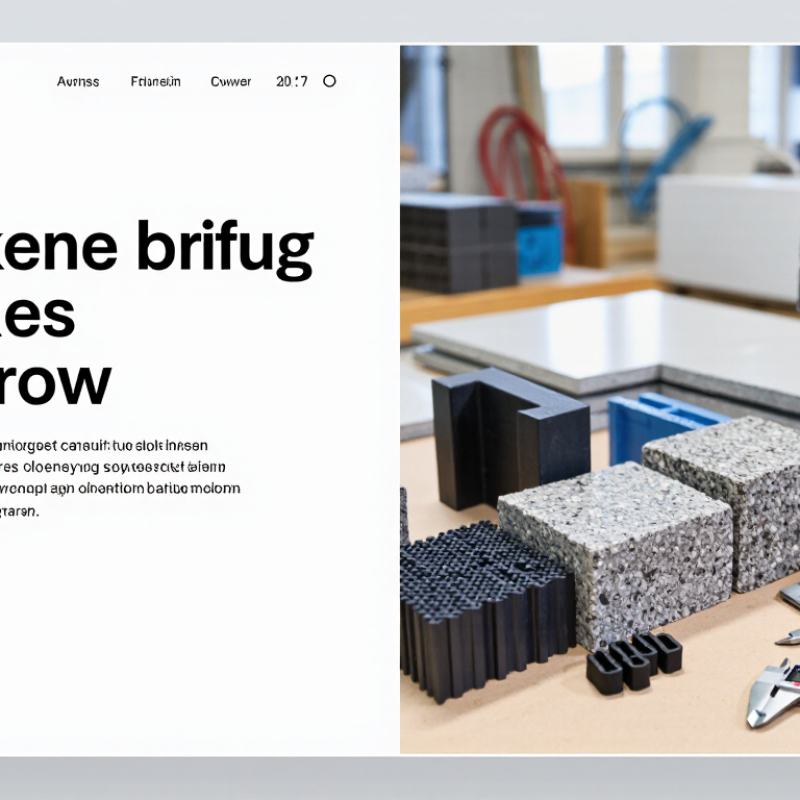
Granite Support Blocks: Purpose, Types, and Common Applications
How to Choose the Best Granite Support Blocks?
Granite support blocks transfer slab weight safely to cabinets, frames, or prepared foundations. They also limit flexing around sinks, joints, and overhangs. Load paths matter. Solid granite blocks suit permanent masonry and heavy exterior work. Polymer or composite blocks offer lighter handling and better dimensional consistency. Rubber-capped blocks help reduce vibration and prevent direct stone-to-metal contact.
According to the U.S. Geological Survey’s Mineral Commodity Summaries 2024, U.S. dimension-stone production in 2023 was valued at approximately 430 million dollars. That scale reflects demanding commercial and residential applications. Selection should begin with the slab’s weight, span, thickness, and expected impact. The Natural Stone Institute’s Dimension Stone Design Manual emphasizes continuous support, stable substrates, and controlled joints. Water changes things. Outdoor blocks need drainage space and resistance to freeze-thaw movement.
Measure the actual contact area, not only the block’s length. A narrow contact point can create stress beneath polished granite. Installers often place resilient pads between dissimilar materials, but pad hardness still matters. Soft material may compress unevenly. Hard material may transmit vibration. The awkward truth is that an oversized block is not automatically safer. Poor alignment can lift one corner and create a visible crack later. Check level, spacing, and bearing before sealing the installation. Details decide performance. A final review against local structural requirements remains essential, especially for cantilevered counters and public-use surfaces.
How to Choose the Best Granite Support Blocks?
Granite Support Blocks: Purpose, Types, and Common Applications
Granite is selected for support blocks because it combines high compressive strength, low water absorption, dimensional stability, and resistance to wear. ASTM C615 specifies a minimum density of approximately 2,560 kg/m³ and a minimum compressive strength of approximately 131 MPa for qualifying granite. Actual values vary by quarry, mineral composition, and finish, so the block size and safety factor should be matched to the supported load and installation environment.
Key Factors for Evaluating Granite Support Block Quality
How to Choose the Best Granite Support Blocks?
Granite support block quality begins with material consistency. Choose blocks with dense, fine-grained stone and no visible cracks, soft veins, or repaired edges. Uneven color is not always a problem, but sudden texture changes deserve closer inspection. Tap each block lightly and listen for a clear, solid response. A dull sound may indicate internal weakness. Small flaws matter.
Accurate dimensions are equally important for stable installation. Check length, width, height, squareness, and surface flatness with calibrated tools. Even a small height difference can create uneven pressure under heavy equipment. The bearing surface should feel smooth, but not dangerously polished. A slight texture can improve contact and reduce sliding. Confirm the rated load against the actual equipment weight, including vibration and movement. Never rely only on appearance.
Moisture resistance and temperature performance also affect service life. Inspect the blocks after exposure to water, oil, dust, or repeated temperature changes. Ask for test data, inspection records, and clear tolerance information from the supplier. In practice, I would request a sample before ordering a large quantity. It reveals edge chipping and dimensional issues early. I once underestimated packaging quality, and several corners arrived damaged. That experience changed my inspection checklist. A reliable evaluation should include the stone, machining, documentation, handling, and installation conditions.
How to Match Block Size and Strength to Granite Loads
Granite support blocks must match both the slab’s weight and its contact pressure. The Natural Stone Institute’s Dimension Stone Design Manual identifies granite densities commonly near 2,600–2,800 kg/m³. A 2.0 × 1.0 × 0.2 metre slab may therefore weigh about 1,080 kg, or 10.6 kN. Two 100 × 100 mm blocks create only 0.02 m² of bearing area. The average pressure is approximately 0.53 MPa before impact or uneven loading.
Use the actual slab dimensions, thickness, density, and support spacing. Then check each block’s compressive capacity against the calculated reaction. ASTM C170/C170M reports compressive strength through tested stone specimens, but that value is not a direct approval for a small support block. Edge damage, moisture, cracks, and tilted floors can reduce performance sharply. A wider block may lower contact stress, but it may also interfere with lifting equipment.
The block should support the slab continuously and avoid point contact. Keep supports aligned beneath strong zones, not near fragile corners. The Dimension Stone Design Manual also stresses careful load transfer and site-specific engineering review. Real handling is rarely perfect. A dropped corner or a slightly twisted frame can create a much higher force than the static calculation. I would specify a documented safety factor, inspect every block before use, and recalculate when slab thickness changes. Small errors become expensive.
How to Choose the Best Granite Support Blocks? - How to Match Block Size and Strength to Granite Loads
Preliminary working-load method: Working load = bearing area × 10 MPa ÷ 5 safety factor. The calculation assumes a centered, uniformly distributed load on a sound, level surface.
Granite Support Block Size, Strength, and Preliminary Working Capacity Block Size
(Length × Width × Height) | Bearing Area | Granite Block Density
(Typical Range) | Assumed Allowable Bearing Stress | Calculated Ultimate Bearing Load | Recommended Preliminary Working Load | Typical Granite Load Suitability |
| 100 × 100 × 50 mm | 0.010 m² | 2,600–2,800 kg/m³ | 10 MPa | 100 kN
≈ 10,200 kgf | 20 kN
≈ 2,040 kgf | Light granite panels, small thresholds, compact countertops, and localized supports. |
| 150 × 150 × 50 mm | 0.0225 m² | 2,600–2,800 kg/m³ | 10 MPa | 225 kN
≈ 22,900 kgf | 45 kN
≈ 4,590 kgf | Medium granite slabs, stair components, landscape slabs, and distributed support points. |
| 200 × 200 × 75 mm | 0.040 m² | 2,600–2,800 kg/m³ | 10 MPa | 400 kN
≈ 40,800 kgf | 80 kN
≈ 8,160 kgf | Heavy paving units, thick worktops, equipment bases, and larger stone assemblies. |
| 250 × 250 × 100 mm | 0.0625 m² | 2,600–2,800 kg/m³ | 10 MPa | 625 kN
≈ 63,700 kgf | 125 kN
≈ 12,740 kgf | High-load bases, large stone panels, heavy monuments, and widely distributed structural supports. |
| 300 × 300 × 100 mm | 0.090 m² | 2,600–2,800 kg/m³ | 10 MPa | 900 kN
≈ 91,700 kgf | 180 kN
≈ 18,350 kgf | Very heavy assemblies where a larger contact area is needed to reduce surface pressure. |
Approximate Granite Dead Load by Slab Thickness | Granite Slab Thickness | Approximate Mass per Square Metre | Approximate Weight per Square Metre | Typical Support Consideration |
| 20 mm | 54 kg/m² | 0.53 kN/m² | Suitable for light-duty applications when adequately supported to limit bending. |
| 30 mm | 81 kg/m² | 0.79 kN/m² | Common thickness for countertops and architectural slabs; use level, evenly distributed support. |
| 40 mm | 108 kg/m² | 1.06 kN/m² | Provides greater stiffness but requires careful positioning of support points and joints. |
| 50 mm | 135 kg/m² | 1.32 kN/m² | Appropriate for heavier paving, steps, bases, and thick architectural elements. |
| 75 mm | 203 kg/m² | 1.99 kN/m² | Heavy slab application; verify bending, edge stability, and foundation capacity separately. |
Important design note: The capacities above are preliminary comparison values, not certified product ratings. Actual performance depends on granite quality, moisture, cracks, block slenderness, surface flatness, eccentric loading, impact, temperature, grout or pad material, and the strength of the supporting substrate. Include the granite self-weight, imposed loads, wind or vibration where applicable, and a suitable safety factor. For structural, suspended, public-access, or safety-critical applications, obtain verified compressive-test data and have the support arrangement checked by a qualified engineer.
Installation, Safety, and Maintenance Considerations
Choose support blocks by load capacity, surface stability, and resistance to moisture. Granite is dense, typically weighing 160–175 pounds per cubic foot, according to Natural Stone Institute technical guidance. A thin-looking overhang can still create significant stress. Select blocks with broad contact areas, non-corrosive hardware, and compatible rubber or neoprene pads. Spacing should follow the fabricator’s load calculation, not guesswork.
Installation requires a level base and continuous support beneath vulnerable joints. Check the floor before positioning each block. Installation matters. Anchor blocks only where the substrate can safely accept fasteners. Avoid drilling near plumbing, electrical lines, or stone edges. OSHA limits respirable crystalline silica exposure to 50 micrograms per cubic meter over an eight-hour shift, with an action level of 25 micrograms. Use wet-cutting methods, local exhaust ventilation, and suitable respiratory protection during fabrication. NIOSH identifies silica exposure as a cause of silicosis, lung cancer, chronic obstructive pulmonary disease, and kidney disease.
Maintenance is simple but not optional. Inspect blocks twice yearly for shifting, cracked pads, rust, or moisture damage. Wipe spills quickly, especially near seams and metal connections. Never use acidic cleaners on granite or its support hardware. A small gap can become a visible tilt. Honestly, perfect alignment is rarely achieved on the first attempt. Recheck the slab after loading it with appliances, fixtures, or daily-use equipment. Document any movement and obtain a qualified structural review before adding weight.