What is a Humidity Sensor and How Does It Work?
Humidity Sensors play a crucial role in various industries, from agriculture to HVAC systems. According to a report by MarketsandMarkets, the humidity sensor market is projected to reach $2.4 billion by 2025. This growth highlights the importance of accuracy and reliability in humidity measurement. These sensors measure moisture levels in the air, helping to enhance product quality and optimize environmental conditions.
The science behind humidity sensors involves detecting changes in electrical resistance or capacitance. These measurements are critical in applications such as climate control systems and industrial processes. However, not all humidity sensors are created equal. Factors like calibration and environmental exposure can affect their performance.
As industries increasingly rely on automation, the demand for advanced humidity sensors rises. Yet, there is often a lack of understanding about their operation and maintenance. This can lead to improper application and reduced efficiency. Recognizing the importance of proper use is essential for maximizing their benefits.
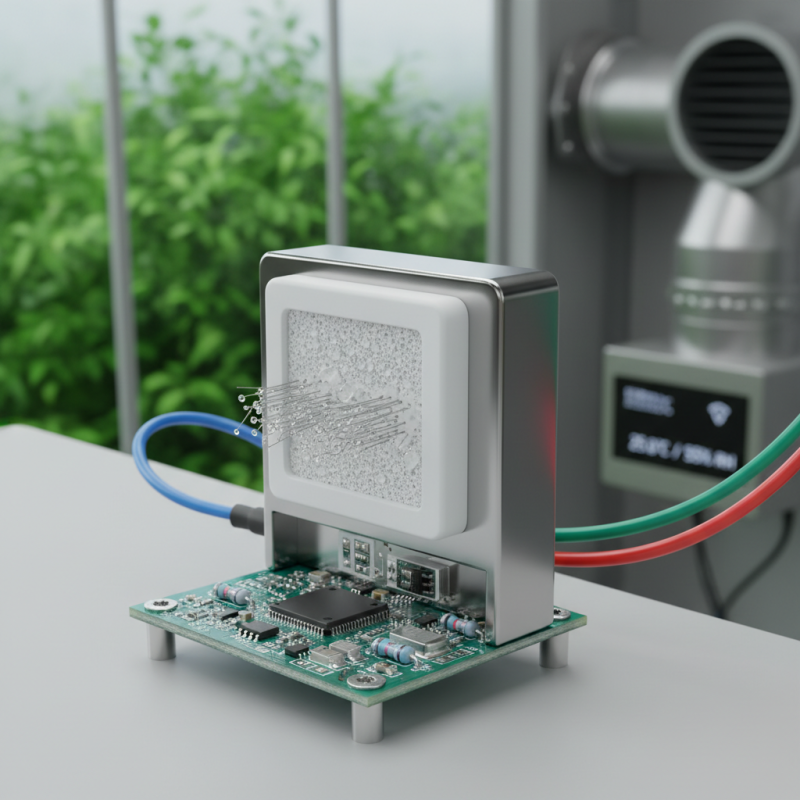
What is a Humidity Sensor and Its Importance in Environmental Monitoring
A humidity sensor plays a crucial role in environmental monitoring. It measures the amount of moisture in the air. These sensors are essential in various fields, including agriculture, HVAC systems, and weather forecasting. High humidity levels can lead to mold growth, while low levels can cause discomfort. Keeping track of humidity enhances comfort and health in living spaces.
Tips: Regularly check humidity levels in your home. Aim for a range of 30% to 50%. Use calibration tools for accurate readings.
In agriculture, humidity sensors influence crop management. They help farmers determine the right conditions for planting and harvesting. High humidity can increase the risk of disease in plants. Proper monitoring enables timely interventions to protect crops.
Investing in a reliable humidity sensor can yield long-term benefits. However, some users may find them overly complex. Understanding how to interpret data can be challenging. Research and learn to improve your environmental management decisions.
Types of Humidity Sensors: Capacitive, Resistive, and Thermal Methods
Humidity sensors are vital in various applications, from weather stations to HVAC systems. They measure moisture levels in the air, providing critical data for climate control and environmental monitoring. Three primary types of humidity sensors include capacitive, resistive, and thermal methods.
Capacitive humidity sensors rely on changes in capacitance. When humidity changes, the dielectric constant of the sensor's material alters. This sensor type is often precise and has a quick response time. In contrast, resistive sensors measure humidity based on electrical resistance variations. As moisture increases, resistance decreases. These sensors are generally simpler but can be less accurate.
Thermal humidity sensors operate on a different principle. They measure the heat loss of a surface to determine humidity levels. This method can be effective in specific environments but may require regular calibration to ensure accuracy. Each sensor type has its own strengths and weaknesses, prompting users to evaluate their needs carefully. Choosing the right humidity sensor often involves balancing accuracy, response time, and application suitability.
Humidity Sensor Types and Their Performance
This bar chart displays the accuracy of different types of humidity sensors: Capacitive, Resistive, and Thermal. Capacitive sensors show the highest accuracy at 90%, followed by Resistive at 80%, and Thermal sensors at 70%. This information highlights the effectiveness and reliability of each sensor type in measuring humidity levels.
How Humidity Sensors Work: Measuring Moisture Levels in the Air
Humidity sensors play a crucial role in various applications, from agriculture to HVAC systems. They measure moisture levels in the air by detecting changes in electrical resistance or capacitance. For instance, capacitive humidity sensors utilize moisture to alter the dielectric constant of a polymer layer. This change can be converted into an electrical signal, showcasing the relative humidity in real-time.
According to market analysis reports, the humidity sensor market is projected to grow significantly, with a compound annual growth rate (CAGR) of over 15% from 2022 to 2029. This increasing demand highlights the importance of maintaining optimal humidity levels in indoor environments. When humidity is too low, it can affect health, causing dry skin and respiratory issues. Conversely, high humidity can lead to mold growth and other structural problems.
Tip: Regularly calibrate your humidity sensors to ensure accurate readings. Also, monitor environmental changes, as sudden shifts can impact sensor performance. Investing in quality sensors can prevent costly damage to your home or business. Remember, not all sensors perform equally, so assess their specifications before use.
Applications of Humidity Sensors: From HVAC Systems to Weather Stations
Humidity sensors play a crucial role in various applications, influencing comfort and functionality across multiple sectors. In HVAC systems, precise humidity measurement ensures optimal indoor air quality. A report from the American Society of Heating, Refrigerating and Air-Conditioning Engineers (ASHRAE) indicates that maintaining relative humidity between 30% and 50% can enhance comfort and reduce mold growth. When humidity levels stray outside this range, energy efficiency declines, leading to increased operational costs.
In environments like greenhouses, monitoring humidity is essential for plant health. A study by the Journal of Agricultural Science shows that optimal humidity levels can boost crop yields by up to 20%. However, excessive humidity can foster plant diseases. Therefore, growers must adapt their watering and ventilation strategies based on real-time data from these sensors.
Weather stations also rely heavily on humidity sensors. Accurate humidity readings contribute to weather forecasting. The National Oceanic and Atmospheric Administration (NOAA) emphasizes that moisture levels significantly affect weather patterns. Yet, sensors can sometimes provide inconsistent readings due to calibration issues. This disparity underscores the need for regular maintenance and updates to sensor technology to ensure reliability.
Factors Affecting Humidity Sensor Accuracy and Performance
Humidity sensors are vital for various applications, but multiple factors can impact their accuracy and performance. One primary factor is temperature fluctuations. When temperature changes, it can alter the sensor's readings, leading to unreliable data. The calibration of the sensor is also crucial. Sensors require regular calibration to maintain accuracy. Over time, they may drift from their original settings.
Another critical aspect is the surrounding environment. Dust, moisture, and chemical vapors can interfere with the sensor's functioning. For instance, a dusty environment can block the sensing element, preventing it from detecting humidity accurately. Additionally, the choice of materials in sensor construction can influence responsiveness. Sensitive materials tend to react well, but they may also wear out quicker, leading to frequent replacements.
Runtime conditions affect performance as well. A humidity sensor used outdoors faces different challenges compared to one in a controlled indoor environment. Exposure to UV light and rain can degrade performance. Thus, considerations like location and environmental factors are essential. Understanding these variables can help in selecting suitable sensors, ensuring they perform effectively.