
China Top Steel Pipe Machinery Accessories Suppliers
China has a broad manufacturing base for equipment used in steel pipe production, from forming and sizing lines to cutting and finishing systems. For buyers, the search for China Top Steel Pipe Machinery Accessories Suppliers is not simply a matter of comparing prices. Parts such as rollers, bearings, guides, and cutting blades must match the machine, material, and production conditions. A small mismatch can cause vibration, uneven forming, or avoidable downtime. Details matter.
This guide introduces supplier considerations for Steel Pipe Machinery Accessories, including product range, customization, technical support, and quality controls. Reliable suppliers should be able to explain material specifications, dimensional tolerances, inspection steps, and suitable applications. Ask for clear drawings or samples when fit is critical, and compare stated capabilities with the production evidence available. A polished catalog alone is not proof.
The right choice depends on your line speed, pipe dimensions, steel grade, and maintenance plan. Requesting references and discussing after-sales support can reveal gaps that a quotation may not show. That takes time. Supplier information can also be incomplete, so verify key claims directly rather than treating every listing as equally dependable. The sections ahead offer a practical framework for assessing options, asking focused questions, and narrowing the field to suppliers that fit your operation. No checklist replaces an engineering review, but a careful comparison can reduce uncertainty before you place an order.
Steel Pipe Machinery Accessories: Scope and Main Components
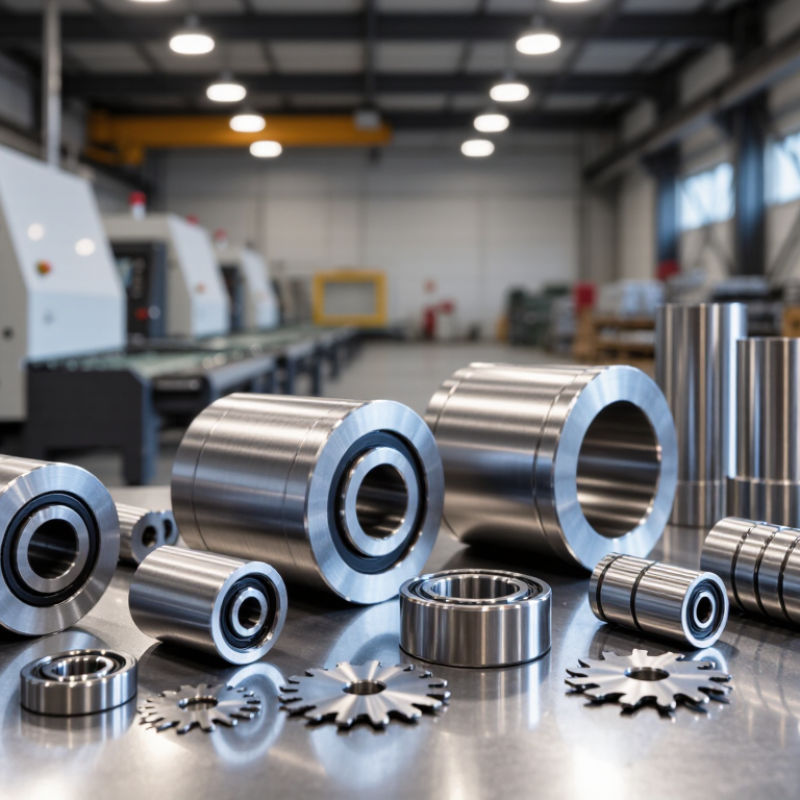
Steel pipe machinery accessories include the replaceable and supporting parts that keep a production line aligned, powered, and stable. Their scope varies with pipe diameter, wall thickness, forming method, and line speed. A forming line may use rollers, guide shoes, bearings, shafts, couplings, and drive components. Rollers shape the strip gradually; guides help keep its edges on course. Small parts matter.
In welded-pipe production, accessories can also include welding contacts, cooling components, sizing rolls, straightening tools, and cutting blades. Sensors and control components monitor position or operating conditions, while lubrication lines help reduce friction at moving points. Match each part to the machine’s load, material, and operating range. Check dimensions, mounting points, surface finish, and wear limits before ordering. A useful supplier should provide clear specifications and explain compatibility, not just list part numbers. Still, a catalog can make selection look simpler than it is; actual line conditions may expose a mismatch that drawings miss. Fit matters.
China Top Steel Pipe Machinery Accessories Suppliers - Steel Pipe Machinery Accessories: Scope and Main Components
| Accessory Category | Main Component | Typical Function | Common Materials or Construction | Key Selection and Compatibility Factors |
|---|---|---|---|---|
| Forming equipment | Forming rolls | Progressively shape strip steel into a round tube or another specified profile. | Hardened tool steel is commonly used; roll surfaces may be treated to improve wear resistance. | Match the roll pass design to the pipe size, wall thickness, steel grade, forming sequence, and mill configuration. |
| Sizing equipment | Sizing rolls | Calibrate the formed pipe to its target outside diameter and help maintain dimensional consistency. | Hardened alloy or tool steel, selected according to service conditions and production requirements. | Check the required pipe diameter, tolerance, roll profile, shaft interface, and adjustment range. |
| Welding equipment | Impeders | In high-frequency ERW mills, concentrate welding current near the strip edges to support efficient seam heating. | Typically a magnetic core housed in a protective, non-magnetic body; cooling arrangements vary by design. | Confirm compatibility with the welding process, tube dimensions, mill layout, cooling method, and operating frequency. |
| Welding equipment | Induction coils | In high-frequency induction welding, generate the electromagnetic field used to heat the strip edges before forging. | Commonly copper tubing or copper conductors, with insulation and water cooling as required by the design. | Match coil geometry and electrical connections to the pipe size, welding system, power level, and cooling capacity. |
| Welding equipment | Squeeze rolls | Bring heated strip edges together at the weld point and help form the longitudinal seam. | Typically made from hardened steel, with roll profiles designed for the mill and product range. | Check roll profile, contact condition, adjustment range, shaft dimensions, and compatibility with the welding stand. |
| Drive and transmission | Mill shafts and arbors | Support rolls and transmit rotational force through forming, sizing, or straightening stands. | Generally manufactured from alloy steel and heat-treated to suit load and fatigue requirements. | Verify shaft diameter, length, keyway or spline details, bearing seats, runout, and required torque capacity. |
| Drive and transmission | Bearings and bearing housings | Support rotating shafts, control alignment, and carry operating loads in mill stands and auxiliary units. | Bearings use hardened bearing steel; housings are commonly cast or fabricated metal. | Match bearing type and dimensions to radial and axial loads, speed, lubrication, operating temperature, and mounting arrangement. |
| Drive and transmission | Gearboxes and gear sets | Transmit and adjust motor speed and torque for mill stands, feed systems, or auxiliary machinery. | Hardened gears housed in a rigid metal casing; lubrication and cooling depend on the gearbox design. | Check ratio, rated torque, input speed, shaft orientation, mounting, duty cycle, and lubrication requirements. |
| Cutting equipment | Flying-saw blades | Cut continuously produced pipe to length while coordinating with the moving product. | Tool steel or other blade materials selected for the cutting method and pipe material. | Confirm blade diameter, thickness, bore, tooth or cutting design, saw type, pipe material, and required cut quality. |
| Cutting equipment | Cold-saw tooling and clamping components | Hold and cut pipe to length in stationary or synchronized cold-saw systems. | Cutting blades are commonly tool steel or carbide-tipped; clamps and fixtures are usually steel. | Match the tooling and clamp profile to pipe shape, outside diameter, wall thickness, material, and saw arrangement. |
| Auxiliary systems | Coolant nozzles, hoses, and fittings | Deliver coolant or process fluid to designated tooling and equipment areas. | Materials vary by fluid and service conditions and may include metal or compatible polymer components. | Check flow rate, pressure, temperature, fluid compatibility, connection type, and resistance to the operating environment. |
| Inspection and control | Guides and alignment components | Guide strip or pipe through selected sections of a production line and help maintain a stable path. | Commonly steel components; contact surfaces may use wear-resistant materials depending on the application. | Confirm product profile, contact points, adjustment range, installation position, and wear or clearance requirements. |
Scope note: Component availability and specifications vary by production process and mill design. Confirm drawings, interfaces, operating conditions, and product requirements before selecting replacement parts.