
Why Choose a CNC Vertical Turning Lathe?

Choosing a Cnc Vertical Turning Lathe begins with understanding the workpiece, not admiring the machine.

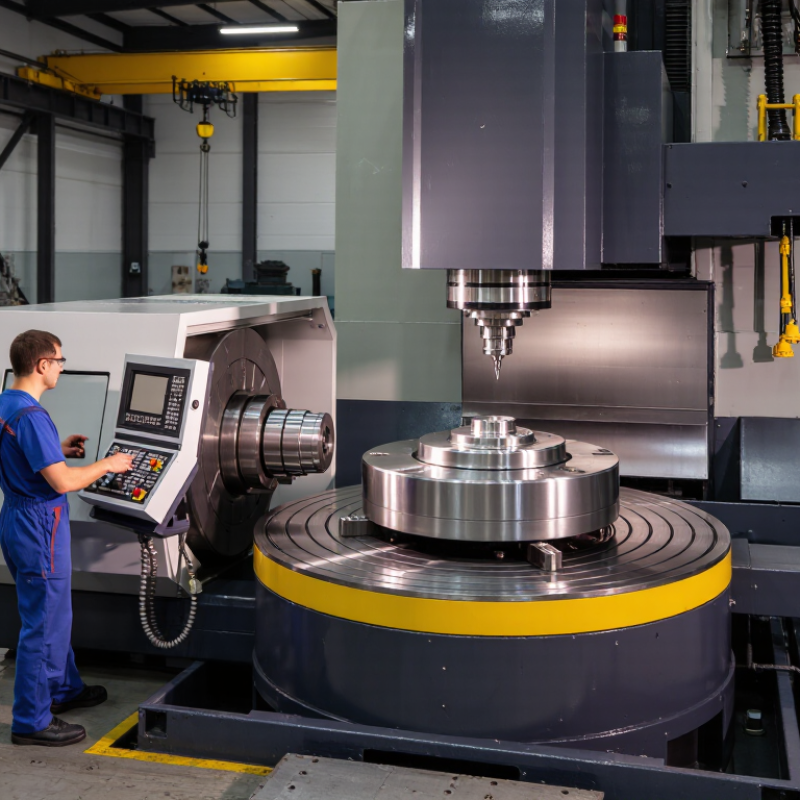
Large, heavy components often need stable support during turning. A vertical design places the spindle above the work area. Gravity helps keep the workpiece seated on the table. This matters when machining gears, flanges, rings, turbine parts, and bearing housings.

The setup feels different.

Operators can load a wide component with a crane. They can inspect the cutting zone more directly. A rigid column and short tool path may also reduce vibration during roughing. That advantage becomes visible when a carbide insert removes several millimeters of steel.

Frederick Winslow Taylor, a pioneer in machining and industrial engineering, wrote, “In the past man has been first. In the future the system must be first.” His statement remains useful here. A CNC Vertical Turning Lathe should serve the entire production system, including fixtures, tooling, inspection, programming, and operator training.

Manufacturers should compare spindle torque, table diameter, axis travel, tool capacity, and control functions. They should also examine chip evacuation and service support. A powerful spindle cannot rescue a weak fixture. A precise machine cannot correct poor measurement practice.

Real production is less perfect.

A machine may promise tight tolerances, yet heat, tool wear, and uneven castings still influence results. Trial cuts and process records remain valuable. Engineers should question optimistic cycle-time claims. Sometimes, a simpler Cnc Vertical Turning Lathe produces more reliable parts than a heavily equipped model.

The best choice balances capacity, repeatability, accessibility, and long-term maintenance. It is not merely a purchase. It is a commitment to controlled machining.
Why Choose a CNC Vertical Turning Lathe?

What Is a CNC Vertical Turning Lathe?

What is a CNC vertical turning lathe? It is a computer-controlled machine with a vertical spindle axis. The workpiece sits on a rotating table or chuck. Cutting tools move across its face, diameter, and internal surfaces. Gravity helps support heavy, wide components during loading. This layout suits rings, flanges, gears, and large bearing housings.

The design is not merely a taller turning machine. Its rigid structure can reduce deflection when tools cut deep or uneven surfaces. Operators can program spindle speed, feed rate, tool movement, and machining cycles. According to Fortune Business Insights’ CNC Machine Market report, the global CNC machine market was valued at about USD 83.8 billion in 2023. The report also forecasts continued growth through 2032, driven partly by automation and precision manufacturing.

In a workshop, the difference becomes visible quickly. A crane places a broad steel blank onto the table. The jaws clamp it, and the probe checks its position before cutting begins. That workflow can improve repeatability and reduce manual alignment time. However, CNC does not remove every problem. Thermal drift, worn inserts, poor clamping, and incorrect programs still create scrap. The word “automatic” can mislead. According to the International Federation of Robotics’ World Robotics 2023 report, global industrial robot installations reached 553,052 units in 2022, showing wider automation growth. Yet skilled setup remains essential, especially for oversized parts and demanding tolerances.

Why Choose a CNC Vertical Turning Lathe?

A CNC vertical turning lathe is designed for stable machining of large, heavy, and short cylindrical components. Its vertical spindle orientation uses gravity to help seat the workpiece securely, while CNC control supports repeatable turning, facing, boring, and grooving operations.

The chart shows representative maximum turning-diameter ranges commonly associated with compact, medium-duty, and large vertical turning machines. Actual capacity depends on machine design, chuck size, tooling, workpiece material, and manufacturer specifications.

How Does a CNC Vertical Turning Lathe Operate?

A CNC vertical turning lathe operates with the workpiece mounted upright on a rotating table.

Gravity helps keep heavy components seated firmly during clamping. This arrangement suits large, short, and wide parts, such as flanges, rings, and housings.

The control system reads programmed coordinates, cutting speeds, feed rates, and tool paths. The table rotates while a tool turret moves across the workpiece surface. One tool may face the part, while another turns an outside diameter or cuts a groove.

Coolant reduces heat and carries chips away from the cutting zone. Accurate setup matters. The operator checks chuck alignment, tool offsets, clamping pressure, and the material drawing before machining begins.

In my experience, dry runs and single-block checks prevent many avoidable errors.

A probe or manual measurement can confirm the workpiece position before full cutting starts. The operator then compares critical dimensions with calibrated instruments, including bore diameter and face runout.

Small errors remain possible. Tool wear, thermal expansion, or an imperfect setup can change the result during a long cycle.

That is why experienced machinists monitor sound, vibration, chip shape, and measured dimensions. A stable process is not automatic; it develops through careful adjustment, documented checks, and practical judgment.

Which Workpieces Suit Vertical Turning Applications?

Why Choose a CNC Vertical Turning Lathe?

Which Workpieces Suit Vertical Turning Applications?

A CNC vertical turning lathe suits workpieces with large diameters, heavy weights, and limited heights. Typical examples include flanges, gear blanks, bearing rings, flywheels, valve bodies, and turbine discs. Gravity helps hold these parts against the chuck. This can reduce fixture complexity and improve loading safety.

The setup becomes especially practical when the part’s diameter exceeds its height. A horizontal lathe may require extra support for a wide, heavy component. Vertical turning keeps the cutting zone accessible and supports stable roughing. According to the 2024 World Machine Tool Survey by Gardner Intelligence, global machine-tool consumption reached roughly US$84 billion in 2023. That investment reflects growing demand for repeatable, automated machining. However, market growth does not make every large workpiece suitable. Slender shafts still need horizontal turning or specialized support.

Tips: Measure the diameter-to-height ratio first. Check chuck capacity, maximum swing, spindle load, and workpiece balance. For interrupted cuts, leave enough rigidity for shock loads. ISO 230-2 testing can help verify positioning accuracy and repeatability, but shop-floor thermal drift still deserves attention.

I have seen large rings machine well vertically, yet thin plates distort after clamping. The boundary is not absolute. Material, wall thickness, tolerances, and chip evacuation can change the decision. A practical trial cut often reveals more than a catalog specification.

Why Choose a CNC Vertical Turning Lathe? - Which Workpieces Suit Vertical Turning Applications?

Workpiece or Application Typical Geometry Why Vertical Turning Is Suitable Common Operations Recommended Workpiece Range Suitability
Large flanges Wide, round parts with a relatively low height-to-diameter ratio The vertical spindle supports the workpiece on the table, reducing the risk of deflection and simplifying loading. Facing, outside turning, boring, grooving, drilling, and bolt-hole machining Medium to very large diameters; select table size and capacity according to the actual part Excellent
Bearing housings Cylindrical or stepped housings with precision bores Rigid fixturing and short tool overhangs help maintain bore accuracy and surface quality. Boring, reaming, facing, turning, and internal grooving Heavy or medium-weight housings requiring stable boring Excellent
Gears and gear blanks Disc-shaped parts with a central bore and machined faces The workholding arrangement provides stable support for heavy discs and allows efficient face and bore machining. Facing, outside diameter turning, boring, chamfering, and grooving Medium to large gears before or after gear-tooth production Excellent
Valve bodies and pump casings Irregular castings with circular sealing faces, bores, or ports A large table and adaptable fixturing can accommodate heavy castings while maintaining a stable cutting setup. Face turning, boring, spot facing, drilling, and counterboring Heavy cast or forged components with a dominant circular axis Very good
Brake discs and drums Thin-to-medium-height discs with concentric surfaces Concentric clamping and rigid support are beneficial for parallel faces, runout control, and repeatable production. Face turning, diameter turning, grooving, and boring Small to large discs, depending on chuck or fixture capacity Very good
Pulley and sheave components Round parts with grooves, hubs, and stepped diameters The machine can combine turning and grooving operations in one setup, reducing handling and setup variation. Turning, V-grooving, boring, chamfering, and facing Medium to large pulleys with sufficient table clearance Very good
Large rings and bearing races Annular components with internal and external precision surfaces The vertical layout is well suited to large-diameter ring work and helps control workpiece stability during heavy cuts. Internal turning, external turning, raceway machining, facing, and grooving Large diameters with moderate height and demanding concentricity requirements Excellent
Short shafts and hubs Compact cylindrical parts with shoulders, bores, or key features Suitable when the part is relatively short and heavy; the setup can minimize vibration compared with unsupported horizontal loading. Turning, facing, boring, threading, and grooving Short, heavy shafts rather than long slender shafts Good
Large welded or forged discs Heavy round blanks with substantial mass and broad faces The machine table carries the component directly, making loading and heavy material removal more practical. Rough turning, facing, boring, chamfering, and finishing Heavy parts within the machine's rated load, swing, and height limits Excellent
Long slender shafts High length-to-diameter ratio with possible deflection along the axis Vertical turning is generally less suitable because the work envelope and support arrangement are optimized for short, wide parts. Turning and threading may require additional support equipment Long parts may exceed height, rigidity, or support limitations Limited
Small, lightweight precision parts Compact components produced in high quantities A vertical lathe can machine them, but a smaller turning center may offer faster loading and lower operating cost. Turning, boring, threading, and grooving Parts that do not require the capacity or rigidity of a large vertical machine Conditional

Selection note: Confirm the required swing diameter, maximum workpiece height, table load, spindle speed and torque, chuck or fixture size, tool capacity, and available machining operations before selecting a CNC vertical turning lathe.

What Benefits Does CNC Vertical Turning Provide?

CNC vertical turning provides practical advantages when workpieces are wide, heavy, or difficult to balance horizontally. Gravity helps seat a large casting against the chuck, while the vertical spindle keeps cutting forces stable. Operators can machine bearing seats, flanges, and gear blanks with fewer repositioning steps. In production, that matters. A repeatable setup may reduce alignment errors and shorten inspection time. Chips also fall away from the cutting zone instead of collecting around deep horizontal surfaces. Small details matter.

92%Deloitte’s 2024 Smart Manufacturing and Operations Survey reports that 92% of manufacturers view smart manufacturing as a main competitiveness driver within three years. A CNC vertical turning lathe supports that shift through automatic tool changes, probing, cycle monitoring, and stored programs. These functions improve consistency across repeated batches. The U.S. Department of Energy also notes that suitable variable-speed drive applications can reduce motor energy use by up to 50%. Actual savings depend on cutting conditions, machine design, and operator practice. That qualification is important. A vertical lathe is not automatically efficient. Poor tool selection, excessive idle time, or unstable workholding can erase the benefit. Experienced users still check chip shape, spindle load, thermal drift, and surface finish after several cycles. Data helps, but it does not replace judgment.

What Factors Guide the Selection of a Vertical Turning Lathe?

Why Choose a CNC Vertical Turning Lathe?

What Factors Guide the Selection of a Vertical Turning Lathe?

Selecting a vertical turning lathe should begin with the workpiece, not the machine catalog. Measure the largest diameter, height, and weight your workshop handles regularly. A vertical layout supports heavy, wide components because gravity helps keep them seated on the table. This can improve loading stability and reduce setup concerns. However, a larger machine is not always better. Extra capacity may increase energy use, floor space, and tooling costs.

Review spindle speed, motor power, table load, and available turning diameter together. A high-torque spindle suits castings and hardened materials, while smaller precision parts may need smoother speed control. Check the machine’s positioning accuracy and repeatability under real production conditions. Ask for test cuts using your material and typical geometry. I have seen specifications look impressive, yet poor chip evacuation created delays during long cycles. That detail is easy to miss.

Tips: Compare your largest current part with your likely workload five years ahead. Check crane access, foundation strength, coolant handling, and operator visibility. Confirm that controls are practical for your team. Training time matters. Also inspect service response, spare-part availability, and maintenance access before purchase. No checklist is perfect. Leave room for honest feedback from machinists who will run the equipment daily.

Scroll to Top