
Top CNC Turning Center Manufacturers for Global Buyers
Global buyers are rethinking how they select a CNC turning center. Price still matters, but it rarely explains long-term performance. Spindle power, bar capacity, thermal stability, control software, service coverage, and operator training can decide whether a machine produces smooth shafts or expensive scrap. Small details matter. A poorly supported machine can become a silent production risk.
The International Federation of Robotics reported 541,302 new industrial robot installations worldwide in 2023. That record figure signals stronger automation demand across factories. Gardner Business Media’s World Machine Tool Survey also continues to track substantial investment in advanced metalworking equipment. These reports do not measure every CNC turning center directly, yet they show the wider market moving toward connected, automated, and more flexible production. Market forecasts from Grand View Research similarly identify automation, precision, and digital monitoring as major growth drivers in CNC machinery.
Peter Zelinski, former editor-in-chief of Modern Machine Shop, has repeatedly stressed a practical point: “The machine tool is only one part of the manufacturing system.” That principle should guide this manufacturer review. Buyers need evidence, not impressive brochures. Look for verified cutting tests, installed customer references, local technicians, spare-parts availability, and realistic cycle-time data. Regional voltage standards and software compatibility deserve attention too. No ranking is perfect. Brand reputation can hide service gaps, while a lesser-known supplier may offer stronger local support. This guide compares leading CNC turning center manufacturers through a global buyer’s lens, while recognizing one uncomfortable truth: the best machine depends on the workpiece, workforce, and factory behind it.
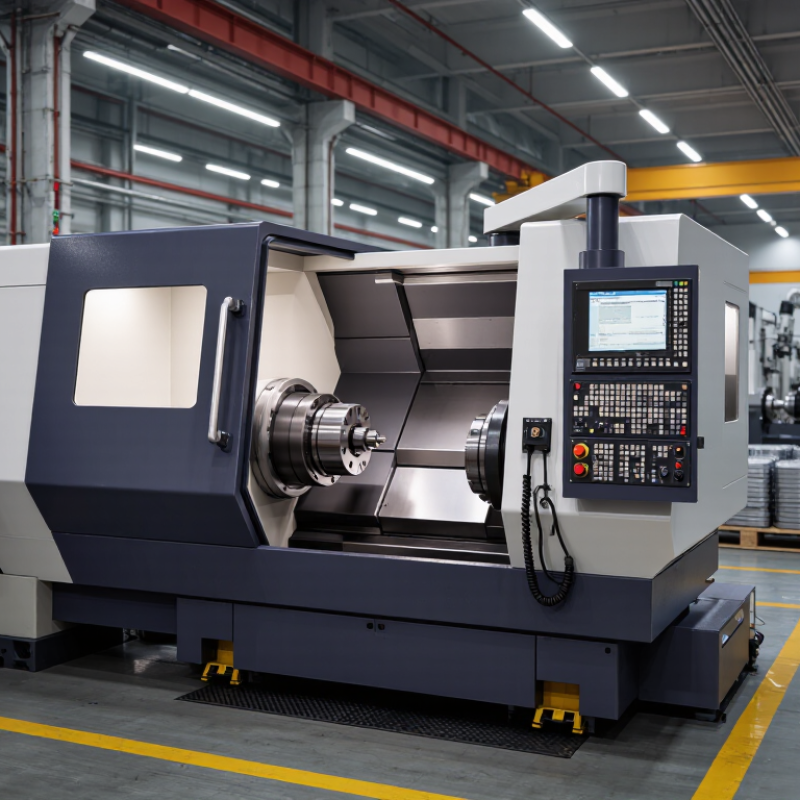
Definition and Role of CNC Turning Centers in Modern Manufacturing
A CNC turning center is a computer-controlled machine that rotates a workpiece against cutting tools. Unlike a basic lathe, it often includes live tooling, a C-axis, and automatic tool changes. These features support turning, drilling, boring, threading, and light milling in one setup. Fewer setups can reduce alignment errors and handling time. In practical production, operators still check tool offsets, chuck pressure, coolant flow, and first-piece dimensions. Automation helps. Judgment remains essential.
The machine’s role is broader than metal removal. It connects digital drawings, process planning, inspection, and repeatable batch production. Fortune Business Insights valued the global CNC machine market at USD 88.25 billion in 2023. Its report projects USD 140.78 billion by 2030, with a 6.9% compound annual growth rate. MarketsandMarkets reports different totals because its market scope differs. These estimates describe CNC machines generally, not turning centers alone. Real returns depend on material, spindle utilization, workholding, maintenance, and operator skill. A high specification does not guarantee high productivity. That is an uncomfortable point.
Tips: Compare cycle time, tool capacity, axis travel, and service response. Request sample machining tests. Measure surface finish and dimensional stability, not only brochure speed. Check chip evacuation carefully; long chips can interrupt production.
Top CNC Turning Center Manufacturers for Global Buyers - Definition and Role of CNC Turning Centers in Modern Manufacturing
| Evaluation Dimension | Typical Industry Range or Definition | Why It Matters to Global Buyers | Common Application Examples |
|---|---|---|---|
| Machine Definition | A CNC turning center is a computer-controlled machine tool that rotates a workpiece while cutting tools remove material to produce cylindrical, conical, threaded, or face-machined features. | Establishes whether the equipment matches the required turning, boring, threading, and facing operations. | Shafts, bushings, pins, flanges, hydraulic components, and threaded fittings. |
| Machine Configuration | Common configurations include 2-axis turning centers, live-tooling machines, Y-axis models, sub-spindle machines, and mill-turn centers. | The configuration determines whether secondary milling, drilling, or back-side machining can be completed in one setup. | Basic production turning; complete machining of complex parts; reduced setup handling. |
| Maximum Turning Diameter | Compact machines may handle approximately 200–300 mm; medium-duty models commonly handle about 300–600 mm; larger machines exceed 600 mm. | The usable diameter must exceed the finished part envelope and allow adequate clearance for tooling and workholding. | Small precision components, automotive parts, industrial couplings, and large power-transmission components. |
| Maximum Turning Length | Typical production models offer approximately 300–1,000 mm of turning length, while extended-bed machines can provide more. | Adequate axis travel prevents overhanging setups and supports stable machining of long workpieces. | Long shafts, rollers, threaded rods, axle components, and tubular parts. |
| Spindle Speed | Many general-purpose turning centers operate from approximately 3,000 to 6,000 rpm; high-speed models may reach 8,000 rpm or more. | Higher speed can improve productivity and surface finish for smaller diameters, while torque remains important for heavy cuts. | Steel roughing, aluminum finishing, stainless-steel machining, and small-diameter production. |
| Spindle Motor Power | Production turning centers commonly use approximately 7.5–30 kW spindle motors, with heavy-duty models available at higher ratings. | Power and torque influence material-removal rate, cutting stability, and the ability to perform deep roughing operations. | Carbon steel, alloy steel, cast iron, stainless steel, and non-ferrous metals. |
| Axis Travel and Accuracy | Typical machines provide X-axis travel of about 150–400 mm and Z-axis travel of about 300–1,000 mm. Positioning accuracy is commonly specified in the hundredths of a millimeter, depending on machine class and test conditions. | Travel defines work envelope, while accuracy and repeatability affect dimensional consistency across production batches. | Precision bushings, bearing seats, sealing surfaces, and parts with repeated diameter tolerances. |
| Tool Capacity | Standard tool turrets often hold approximately 8–12 tools; driven-tool or multifunction configurations may provide 12–24 or more stations. | More stations reduce manual tool changes and support complex parts with multiple operations. | Turning, grooving, threading, drilling, tapping, boring, and cross-milling operations. |
| Workholding System | Three-jaw chucks, collet systems, hydraulic chucks, power chucks, and bar-feeding systems are widely used. | Workholding affects setup time, concentricity, clamping force, part accessibility, and automation compatibility. | Bar-stock production, chucking work, thin-wall components, and repeat batch manufacturing. |
| Automation Compatibility | Available options include bar feeders, parts catchers, robotic loading, automatic tool measurement, chip conveyors, and palletized handling. | Automation can reduce labor input, improve cycle consistency, and support unattended or lights-out production. | High-volume automotive, medical, electronics, and general industrial component production. |
| Control and Programming | CNC programs generally use standardized G-code and may support conversational programming, tool management, probing, and network connectivity. | Familiar controls simplify operator training, program transfer, diagnostics, and integration with CAD/CAM workflows. | Prototype work, repeat production, digital job tracking, and multi-machine manufacturing cells. |
| Coolant and Chip Management | Flood coolant, through-tool coolant, chip flushing, chip conveyors, and filtration systems are common options. | Effective cooling and chip evacuation improve tool life, surface quality, operator safety, and machine uptime. | Continuous turning, deep grooving, difficult-to-machine alloys, and high-volume metal removal. |
| Typical Industries | CNC turning centers are used across automotive, aerospace, energy, medical, hydraulics, electronics, and general engineering sectors. | Industry requirements determine the needed tolerances, materials, certifications, automation level, and machine rigidity. | Powertrain parts, aircraft fittings, valve bodies, surgical components, connectors, and industrial machinery parts. |
| Global Purchasing Factors | Key factors include electrical standards, installation requirements, spare-parts availability, technical documentation, training, warranty terms, and local service coverage. | These factors influence total ownership cost, commissioning time, maintenance response, and long-term production reliability. | Cross-border equipment procurement, factory expansion, contract manufacturing, and replacement-machine projects. |
| Primary Manufacturing Role | CNC turning centers combine programmed motion, rigid machine structures, automatic tooling, and repeatable workholding to produce consistent parts. | They reduce manual intervention, shorten production cycles, improve repeatability, and support scalable manufacturing. | Prototype-to-production manufacturing, multi-shift operations, and standardized component families. |
Note: Specifications shown are representative industry ranges. Actual capabilities vary according to machine size, configuration, tooling, workholding, material, and manufacturer-specific design.
Related Posts
-
10 Essential Tips for Operating a Lathe Machine Efficiently?
-
How to Choose the Right Lathe Machine for Your Needs?
-
What Are the Top CNC Lathe Manufacturers in China?
-
2026 Best Lathe Machine Options for Global Buyers?
-
Why Choose a CNC Turning Machine for Precision Manufacturing?
-
What is CNC Lathe and How Does It Benefit Your Business?