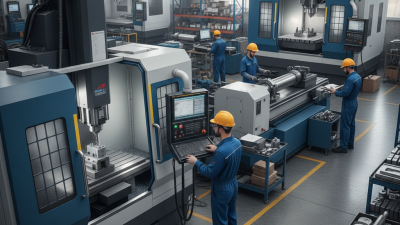
Choosing a machine for 2026 means looking beyond advertised accuracy. Global buyers must match the machine to their materials, tolerances, production volumes, and service needs. A compact three-axis mill may suit aluminum parts and short runs. Complex medical or aerospace components may demand five-axis capability, verified thermal control, and reliable probing. The right choice depends on the work—not the brochure.
A fictional precision CNC advisor, Alex Morgan, captures one useful principle: “Accuracy is not a brochure number; it is a result proven across the full work cycle.” Buyers should ask how suppliers test accuracy, what conditions those tests assume, and whether results are documented. They should also examine spindle performance, controller features, tool-change time, automation options, and the availability of local training and spare parts. Details matter.
This guide compares leading precision cnc machines for buyers sourcing across regions. It considers practical fit, not just impressive specifications. A machine with tight stated tolerances may still disappoint if its foundation, coolant system, or maintenance plan is overlooked. That is easy to miss. Total ownership cost, installation requirements, operator skills, and supplier support deserve equal attention. Some product claims are difficult to compare directly; test methods vary. Treat rankings as a starting point, then confirm performance with representative parts and a written acceptance plan. No machine is perfect. The best choice is the one that consistently meets your requirements on your shop floor.
2026 Best Precision CNC Machines for Global Buyers
What Precision CNC Machines Are and Why They Matter in 2026
Precision CNC machines use programmed instructions to control cutting tools and workpiece movement. Their value lies in producing parts with consistent dimensions, repeatable geometry, and reliable surface finishes. Accuracy depends on more than the machine: spindle condition, tool wear, temperature, workholding, and calibration all matter. A warm spindle can shift results. Small errors add up.
Grand View Research estimated the global CNC machine market at USD 101.22 billion in 2023 and forecast a 10.3% compound annual growth rate from 2024 to 2030. That market estimate signals investment, not guaranteed precision. The International Federation of Robotics reported 4.28 million industrial robots operating worldwide in 2023, up 10% year on year. As factories automate, stable machining and dependable inspection become more important. Yet headline figures cannot tell buyers how a machine performs on their actual material.
Tips: Ask for positioning and repeatability test results, thermal compensation details, and a sample cut in your target material. Check the machine after warm-up, not only when it is cold. A brochure tolerance is not a shop-floor promise.
Precision CNC machine selection starts with the part, not the machine catalogue. Three-axis vertical mills suit flat plates, pockets, and general tooling. Five-axis mills handle angled features and complex turbine or medical components with fewer setups. Turning centers produce shafts, bushings, and threaded parts; Swiss-type lathes are useful for small, slender components. Large routers can cut panels and other non-ferrous materials, but they are not substitutes for rigid metal-cutting mills.
Application needs differ. Aerospace parts may require five-axis access and stable thermal control, while high-volume shafts often benefit from automated turning cells. The International Federation of Robotics reported 541,302 industrial robot installations worldwide in 2023 in its World Robotics 2024 report. That figure describes factory automation, not CNC sales, but it highlights the value of checking machine interfaces and loading plans early. A fast spindle alone proves little. Toolholding, workholding, measurement routines, and operator skill all affect real accuracy. No machine is perfect.
Tips: Match the machine’s travel and spindle torque to your heaviest, longest cut. Ask for a sample-part trial using your material and tolerance. Check repeatability after warm-up, not only the brochure specification. Leave room for honest uncertainty: production results can vary with tooling, coolant, and maintenance.
| CNC Machine Type | Typical Configuration | Indicative Positioning Capability* | Best Industrial Applications | Common Workpiece Materials | Key Buying Considerations |
|---|---|---|---|---|---|
| 3-Axis Vertical Machining Center | Three linear axes; vertical spindle; commonly equipped with an automatic tool changer. | About 5–10 μm positioning accuracy on precision-class machines, subject to specification and test conditions. | Prismatic parts, plates, housings, molds, fixtures, and general-purpose precision milling. | Aluminum alloys, steels, stainless steel, cast iron, and engineering plastics. | Check table size, spindle speed and power, tool capacity, thermal stability, chip evacuation, and local service support. |
| Horizontal Machining Center | Horizontal spindle, usually with a rotary pallet or indexing table for multi-face machining. | About 4–8 μm positioning accuracy on precision-class machines; actual results depend on axis travel and setup. | High-volume production of automotive, hydraulic, industrial-equipment, and structural components requiring machining on several faces. | Cast iron, steel, aluminum alloys, and other production-grade metals. | Evaluate pallet size, pallet-change time, workpiece access, spindle torque, automation readiness, and repeatability under production conditions. |
| 5-Axis Machining Center | Three linear axes plus two rotary axes; simultaneous or indexed 5-axis operation. | Linear-axis positioning may be in the approximate 5–10 μm range on precision-class machines; rotary-axis performance is specified separately. | Complex aerospace parts, impellers, turbine components, medical implants, dies, and parts with compound surfaces or angled features. | Aluminum, titanium alloys, nickel-based alloys, stainless steel, and mold steels. | Compare rotary-axis accuracy, volumetric compensation, collision avoidance, work envelope, tool-center-point control, and postprocessor compatibility. |
| CNC Turning Center | One or more turning spindles with X/Z axes; some configurations add a Y-axis, live tooling, or a sub-spindle. | About 5–10 μm positioning accuracy on precision-class machines; part results also depend on spindle condition and workholding. | Shafts, bushings, threaded parts, flanges, hydraulic fittings, and rotational components for general industry. | Carbon steel, stainless steel, aluminum, brass, and engineering alloys. | Review maximum turning diameter and length, bar capacity, spindle bore, live-tool capability, chucking options, and chip management. |
| Swiss-Type CNC Lathe | Sliding headstock with guide bushing; often uses multiple tools and simultaneous machining operations. | About 3–8 μm positioning capability on precision-class machines; finished-part accuracy depends on stock, tooling, and process control. | Small-diameter, long, slender, high-volume components such as medical fasteners, watch parts, connectors, and precision pins. | Stainless steel, titanium alloys, brass, aluminum, and other bar-stock materials. | Match bar capacity and part length to the product mix; also assess guide-bushing setup, tool stations, unattended operation, and changeover needs. |
| CNC Surface or Cylindrical Grinder | Grinding wheel with controlled table or workpiece motion; configured for flat, external, internal, or profile grinding. | Approximately 1–3 μm positioning capability on high-precision configurations; surface finish and size control depend heavily on grinding process conditions. | Finishing hardened components, bearing surfaces, precision shafts, dies, machine ways, and components requiring fine surface finish. | Hardened steels, tool steels, ceramics, carbide, and selected superalloys. | Check grinding geometry, wheel and dressing systems, coolant filtration, thermal control, guarding, and the required surface-finish range. |
| Wire EDM | Electrically controlled wire electrode cuts conductive workpieces in a dielectric fluid; commonly supports tapered cuts. | About 2–5 μm contour capability may be achievable on precision machines with suitable settings and finishing passes. | Intricate profiles, punches and dies, narrow slots, fine features, and hardened parts that are difficult to machine conventionally. | Tool steel, carbide, stainless steel, copper alloys, and other electrically conductive materials. | Consider workpiece thickness, taper requirements, wire and filter costs, surface-finish needs, and the machine’s automatic wire-threading capability. |
| CNC Jig Borer / Coordinate Boring Machine | High-rigidity machine with precision spindle positioning and controlled, accurately referenced hole-making. | Approximately 2–5 μm positioning capability on precision-class equipment; hole accuracy also depends on tooling, temperature, and measurement method. | Accurate hole patterns, tooling plates, gauges, fixtures, precision molds, and components requiring closely located bores. | Tool steels, aluminum alloys, cast iron, and other machinable metals. | Verify spindle condition, axis measurement system, thermal stability, probing options, work envelope, and calibration documentation. |
*Figures are indicative ranges for precision-class equipment, not guaranteed part tolerances or a universal rating. Positioning capability varies by machine model, axis travel, installation, temperature, maintenance, and measurement method. For a comparable evaluation, request the manufacturer’s machine-specific acceptance-test data, including the applicable ISO 230-2 results, and verify performance under your intended operating conditions.
For 2026 CNC machine comparisons, separate positioning accuracy from repeatability. Ask for ISO 230-2 test results, including measurement conditions, and check whether figures apply across the full working envelope. Heat matters: a machine may drift after hours of cutting, even when its cold-start results look excellent. A real test cut helps.
Speed needs context. Compare cutting feed rates and spindle torque, not just rapid-traverse figures; a fast empty move does not guarantee a shorter finished part. Match capacity to actual jobs: measure part dimensions, fixture space, tool length, and workpiece weight. Leave room for loading access. Check automation through tool-change time, probing options, and recovery after a stoppage. That last detail is easy to overlook.
Industry reports offer useful context, though they cannot predict one shop’s results. The International Federation of Robotics’ World Robotics 2024 report recorded 541,302 industrial robot installations worldwide in 2023, reflecting growing automation demand. Deloitte’s 2024 Smart Manufacturing Survey found that 86% of respondents expect smart manufacturing to be a primary competitiveness driver within five years. Use those signals to assess integration needs, not to justify buying the most automated configuration. A spec sheet can flatter a machine; production trials may tell a less tidy story.
For global buyers, the best precision CNC machine is the one that fits the work, shop, and support network. Established manufacturers offer different strengths, so compare documented accuracy, repeatability, and service access rather than relying on reputation alone. Fit matters. A three-axis mill may suit flat plates and simple housings, while five-axis capability can reduce setups for contoured parts. A turning center with live tooling may handle shafts and cross-drilled features in one cycle. Ask for a sample cut in a material similar to yours. Measure the finished part, not just the brochure figures.
Configuration choices affect daily production. Consider spindle speed and torque, tool capacity, work envelope, probing, chip removal, and control interface. A larger machine is not automatically better; it may consume floor space and energy without improving part quality. Buyers should also check installation needs, operator training, spare-parts access, and response times in their region. Request a clear list of included options and excluded items. Small details matter.
A buyer’s shortlist can include builders from several regions, but compare equivalent configurations and written service commitments. Review references from shops producing similar parts, where possible. One imperfect lesson: a polished demonstration does not reveal every maintenance burden. Ask what routine checks operators actually perform, and how long common repairs take. The answer may be less tidy than the sales sheet.
2026 Best Precision CNC Machines for Global Buyers
Choosing a precision CNC machine starts with the parts it must produce, not the most impressive specification sheet. Record material types, part dimensions, tolerances, and expected monthly volume. A steel component with deep pockets may need different spindle power and rigidity than a small aluminum housing. Check the working envelope against real fixtures and tool clearances. A machine that fits the part on paper may feel cramped during setup. Small details matter.
Compare positioning accuracy and repeatability under conditions similar to your shop. Ask for test-cut data, inspection reports, and a clear explanation of measurement methods. Also review controller usability, tool capacity, maintenance access, and local technical support. Request a full cost breakdown covering installation, training, tooling, and routine service. Delivery terms and spare-parts availability can affect production more than buyers expect. They are easy to overlook.
Tips: Send a representative drawing and material sample when requesting a quote. Confirm electrical requirements, floor-space needs, and delivery access before ordering. Ask who will train operators, and how quickly common service parts can arrive. If a specification is unclear, ask for it in writing. A little hesitation here is healthy; assumptions can become expensive.