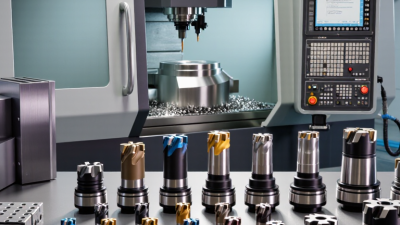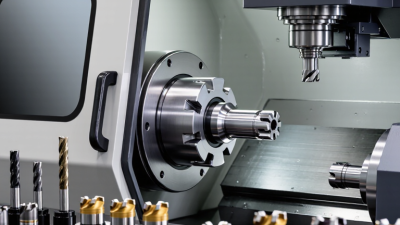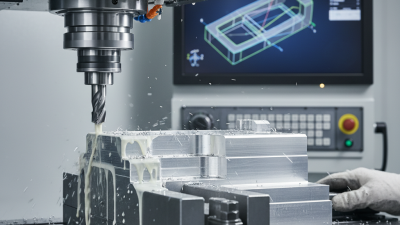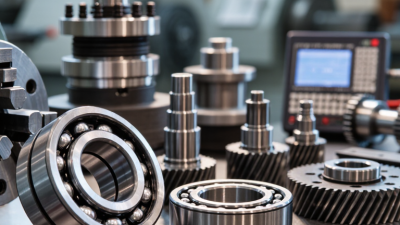
Global buyers face a crowded machining tools market, where similar-looking products can deliver very different results. A carbide end mill may appear affordable, yet poor coating quality can cause chipped edges, rough surfaces, and unexpected downtime. The right choice depends on material, tolerance, machine power, cutting speed, and production volume.
Dr. Tony Schmitz, a respected machining researcher and educator, emphasizes a practical principle: “The cutting tool is part of the machine tool system.” This idea matters. Buyers should not judge tools by price alone. They should examine tool geometry, substrate grade, coating technology, runout, coolant compatibility, and supplier support. A reliable manufacturer should provide test data, dimensional consistency, and clear application guidance.
Small details matter.
This guide compares the top machining tools used by global manufacturers, including drills, end mills, inserts, reamers, taps, and specialty cutters. It also considers tool life, surface finish, repeatability, and total operating cost. A cheaper tool may require more frequent changes. That is not always economical. A premium tool may also disappoint when the wrong geometry meets hardened steel or unstable fixturing.
The discussion remains practical rather than absolute. There is no universal best tool. Buyer priorities differ across aerospace, automotive, mold-making, energy, and general engineering. Even experienced teams sometimes select tools based on habit. That deserves reconsideration. Careful trials, measurable results, and transparent supplier claims provide a stronger foundation for purchasing decisions.
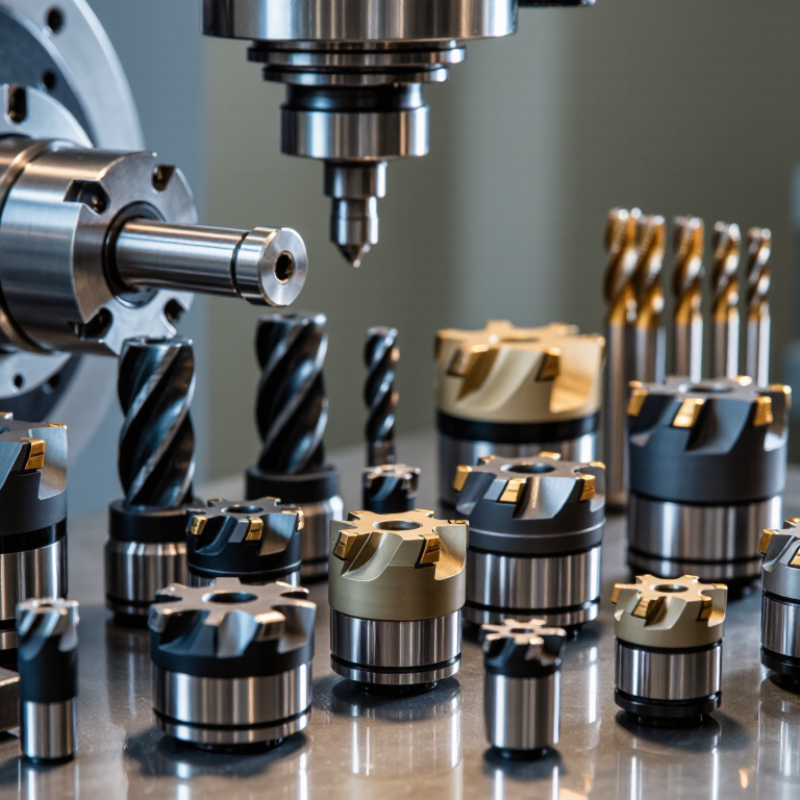
Machining tools are devices used to shape metal, plastic, and other engineering materials. They remove unwanted material through cutting, drilling, milling, turning, grinding, or finishing. Their accuracy affects dimensions, surface quality, production speed, and workplace safety. On a real shop floor, a small edge defect can create vibration, heat, and costly scrap. Tool selection is never just a price comparison.
Cutting tools remove material with a sharp edge and include inserts, end mills, and saws. Drills create round holes, while reamers improve hole size and finish. Milling cutters produce slots, pockets, faces, and complex profiles. Turning tools shape rotating workpieces on a lathe. Grinding wheels remove tiny amounts of material and support close tolerances. Measuring tools verify diameter, depth, flatness, and surface results. Workholding devices secure parts during machining.
Global buyers should match each tool to material hardness, machine power, spindle speed, and expected volume. Carbide tools often resist wear, but they can chip under unstable cutting conditions. Coolant may extend tool life, although poor delivery can still leave heat marks. A practical purchasing check includes geometry, coating, tolerance, shank size, and replacement availability. I have seen buyers focus on tool price and overlook setup time. That decision can become expensive. No category works perfectly everywhere. Testing one tool on the actual machine remains useful, even when supplier data appears convincing.
Selecting machining tools starts with the workpiece, not the catalog. Steel, aluminum, titanium, and composites require different cutting behavior. Carbide tools suit many steels because they combine hardness with practical toughness. Polished carbide often reduces built-up edge when cutting aluminum. PCD tools can improve wear resistance on abrasive composites, but their higher cost needs careful justification. Ceramic tools may perform well on hardened steel or heat-resistant alloys, yet they demand rigid machines and stable setups.
The operation matters just as much. Rough milling needs strong edges and dependable chip evacuation. Finishing favors sharper geometry, controlled runout, and predictable surface quality. Drilling requires attention to point angle, coolant delivery, and hole depth. Threading tools should match the material’s ductility and the required thread tolerance. ISO 513 provides a useful framework for classifying tool materials by application and performance. Use it as a guide, not a substitute for testing.
Market data also deserves context. MarketsandMarkets’ Cutting Tools Market report projects growth from about 21.5 billion dollars in 2023 to 26.5 billion dollars by 2028. That expansion does not mean every premium tool fits every factory. The U.S. Cutting Tool Institute and AMT reported more than 2.5 billion dollars in annual U.S. cutting-tool consumption in recent years, showing the scale of buyer demand.
My practical rule is simple: test one tool, record wear, power, cycle time, and surface finish. Test before scaling. Data beats guesswork.
However, tool life can change after one coolant, fixture, or machine adjustment. That limitation deserves honest review.
Global buyers commonly choose CNC turning centers, vertical machining centers, carbide cutting tools, and precision inspection equipment. These tools cover shafts, housings, brackets, molds, and other complex parts. Fortune Business Insights reported that the global CNC machine market reached about USD 83 billion in 2023. Its forecast also indicates steady growth through 2032. Demand is moving toward flexible, automated equipment.
CNC turning centers suit round components and repeated production. Vertical machining centers handle drilling, milling, tapping, and pocketing in one setup. Carbide inserts and solid carbide end mills remain popular because they resist heat and maintain stable cutting edges. The International Trade Centre reports that advanced manufacturing equipment remains widely traded across major industrial economies. Buyers often compare spindle speed, tool capacity, positioning accuracy, and maintenance access.
Inspection tools matter just as much. Coordinate measuring machines, optical systems, and digital gauges help verify tolerances before shipment. Deloitte’s 2024 Smart Manufacturing Survey found that 86% of manufacturers viewed smart production as important for competitiveness. That finding supports demand for connected machining equipment. Still, the most expensive machine is not always the best choice. A smaller machining center may reduce idle space and training costs. Cutting data also needs local testing. Catalog figures can look perfect, but real materials, operators, and coolant conditions may disagree.
The table below compares widely used machining tools by application, workpiece material, performance range, and purchasing considerations. Accuracy and cutting data are indicative industry ranges and depend on machine condition, tool geometry, coolant, workholding, and cutting parameters.
| Machining Tool | Primary Operations | Common Workpiece Materials | Typical Accuracy or Finish | Typical Cutting Range | Key Advantages | Global Buyer Selection Criteria |
|---|---|---|---|---|---|---|
| Solid Carbide End Mills | Slotting, profiling, pocketing, contouring, and 3D milling | Steel, stainless steel, cast iron, aluminum, titanium, and hardened steel | Dimensional accuracy commonly within 0.01–0.05 mm; fine surface finish when properly applied | High spindle speeds; commonly selected in diameters from 1–25 mm | High rigidity, good wear resistance, and suitable for complex CNC work | Coating type, flute geometry, diameter tolerance, runout, tool life, and compatibility with the machine spindle |
| Indexable Milling Cutters | Face milling, shoulder milling, roughing, and high-metal-removal work | Steel, cast iron, stainless steel, aluminum, and non-ferrous alloys | Typical roughing-to-semi-finishing tolerance of 0.02–0.10 mm | Common cutter diameters from 40–160 mm; cutting speed depends strongly on insert grade | Replaceable inserts reduce downtime and provide economical cutting for large volumes | Insert availability, cutter body balance, number of teeth, chip control, edge security, and total cost per cutting edge |
| Carbide Twist Drills | High-speed drilling of precision holes | Aluminum, steel, stainless steel, cast iron, titanium, and nickel alloys | Hole diameter tolerance commonly around IT8–IT10 before finishing operations | Commonly used from 1–20 mm; high cutting speeds with suitable coolant delivery | Fast penetration, strong hole quality, and reduced need for pilot drilling in rigid setups | Point geometry, coolant-through capability, flute design, hole depth, edge preparation, and resistance to thermal cracking |
| Indexable Drills | General-purpose drilling, large-hole drilling, and high-productivity hole making | Carbon steel, alloy steel, cast iron, stainless steel, and aluminum | Typical hole tolerance of approximately 0.05–0.15 mm, depending on setup and tool diameter | Common diameters from 12–80 mm | High material-removal rate, replaceable cutting edges, and lower cost for larger holes | Insert security, hole straightness, chip evacuation, body rigidity, and availability of replacement inserts |
| Reamers | Finishing and sizing previously drilled or bored holes | Steel, stainless steel, cast iron, bronze, brass, and aluminum | Commonly achieves IT7–IT9 hole tolerances with a smoother finish than standard drilling | Usually operated at lower speeds and feeds than drills; allowance often about 0.1–0.3 mm per diameter | Improves hole size consistency, roundness, and surface finish | Allowance control, margin design, straightness, coolant compatibility, and required finished-hole tolerance |
| Taps | Internal thread production | Steel, stainless steel, cast iron, aluminum, brass, and engineering plastics | Thread quality commonly specified by ISO metric tolerance classes such as 6H | Available for fine and coarse threads across a broad range of diameters; cutting speed varies by material | Efficient thread production with standardized thread forms and broad machine compatibility | Thread standard, spiral-point or spiral-flute design, chip evacuation, tap strength, coating, and machine synchronization |
| Thread Mills | Internal and external thread milling | Steel, stainless steel, hardened steel, titanium, aluminum, and difficult-to-machine alloys | Can produce high-accuracy threads, often around 6H or better with suitable programming and setup | Suitable for a wide range of thread sizes; cutting speed is generally higher than tapping for some applications | One tool can often machine multiple thread diameters of the same pitch; lower risk of tap breakage | CNC helical interpolation capability, tool diameter, thread profile, rigidity, and software support |
| Boring Tools | Hole enlargement, correction, internal profiling, and precision boring | Steel, cast iron, stainless steel, aluminum, and hardened materials | Typical precision boring tolerance of 0.01–0.03 mm in stable conditions | Commonly used for medium and large internal diameters; cutting speed depends on tool material and workpiece | Adjustable diameter control and strong capability for correcting hole position or size | Tool rigidity, vibration control, adjustment resolution, overhang, coolant access, and insert availability |
| Carbide Indexable Turning Tools | External turning, facing, grooving, profiling, and internal turning | Steel, stainless steel, cast iron, aluminum, titanium, and heat-resistant alloys | Typical turning tolerance of 0.02–0.08 mm; finishing quality depends on nose radius and feed | Broad range of cutting speeds; insert geometries are selected by material and cutting conditions | Fast insert changes, repeatable indexing, and broad application coverage | Insert shape, nose radius, chipbreaker, grade, toolholder rigidity, and cutting-edge security |
| Abrasive Grinding Wheels | Surface grinding, cylindrical grinding, tool sharpening, and precision finishing | Hardened steel, tool steel, stainless steel, carbide, ceramics, and superalloys | Can achieve sub-micrometer surface roughness in finishing applications; dimensional control may reach a few micrometers | Wheel speed commonly ranges from approximately 20–80 m/s, depending on wheel construction and machine | Excellent surface finish, heat-treated material capability, and high dimensional precision | Abrasive type, grit size, grade, bond, wheel balance, dressing method, and machine safety rating |
| Diamond and CBN Tools | Precision finishing, hard turning, non-ferrous machining, and abrasive-material processing | CBN for hardened steels; diamond for aluminum alloys, copper, graphite, composites, and ceramics | Often selected for micron-level finishing and excellent edge stability in suitable materials | Cutting parameters vary significantly; diamond is generally avoided for ferrous materials at elevated temperatures | Very high hardness, low wear, and superior surface finish in specialized applications | Workpiece chemistry, edge preparation, brazed or clamped construction, thermal control, and application-specific geometry |
Note: Actual tool performance depends on tool geometry, workholding, machine rigidity, spindle condition, coolant delivery, programming, and the specific workpiece material grade.
Global buyers often compare machining tools by price first, yet tool quality determines the real cost.
A 2024 Fortune Business Insights assessment valued the global cutting-tool market at about USD 23.9 billion in 2023. That scale reflects intense demand, but it also creates uneven quality. Buyers should examine carbide grade, edge preparation, coating thickness, runout, and documented tool-life tests.
Fit comes first. A tool that fails after 40 minutes can cost more than one priced 30% higher.
Compatibility requires more than matching diameter and holder type. Check spindle speed, coolant method, machine rigidity, workpiece material, and controller limits.
ISO 13399 supports standardized cutting-tool data, which helps purchasing teams compare geometry and specifications across suppliers. However, digital compatibility does not guarantee cutting stability. A rigid toolholder may perform well on steel but chatter in a lightweight aluminum setup. Trial cuts should record cycle time, surface roughness, insert wear, and scrap rate.
Cost analysis should include freight, replacement intervals, setup labor, and rejected parts. The 2024 World Machine Tool Survey reported continued growth in global machine-tool demand, increasing pressure to control productivity losses.
My own comparison sheets sometimes overweight purchase price. That is a weakness. A practical test uses the same machine, material batch, coolant, and cutting parameters. Keep the evidence. Then revise the ranking when production data disagrees with the catalogue.
What Are the Top Machining Tools for Global Buyers?
Reliable machining suppliers are judged by more than machine lists. Their equipment must match the required part, material, tolerance, and production volume. CNC turning centers suit shafts, bushings, and other round components. CNC milling machines handle slots, pockets, and complex surfaces. Grinders support tight finishing requirements. Cutting tools, fixtures, and measuring equipment also affect final quality.
Global buyers should request equipment records, calibration certificates, material traceability, and sample inspection reports. A dependable supplier explains spindle capacity, repeatability, surface finish, and maintenance history clearly. Ask how operators control tool wear during long production runs. Visit the workshop when possible. Look for clean work areas, labeled materials, stable processes, and visible inspection routines. Documentation may look impressive, but inconsistent parts reveal more.
Tips: Compare suppliers using the same drawing and quality criteria. Request a small trial batch before approving larger orders. Confirm packaging, lead times, communication channels, and corrective-action procedures in writing. Check whether inspection data matches actual parts. It sounds basic. It is often missed.
No supplier is flawless. During sourcing reviews, I have seen excellent machines weakened by poor fixture design or rushed inspection. Buyers should leave room for technical discussion and process improvement. A supplier willing to admit limitations may be more reliable than one promising perfection. That judgment requires evidence, not attractive sales language.
Typical achievable dimensional tolerance by machining process. Lower values indicate tighter precision and should be verified against the supplier’s inspection capability, material, part size, and geometry.
CNC milling and turning are widely used for general production, while surface grinding and wire EDM are selected when tighter tolerances are required. Laser cutting is efficient for sheet processing but normally provides a wider tolerance range. These representative values reflect common industrial capability ranges rather than guaranteed specifications.